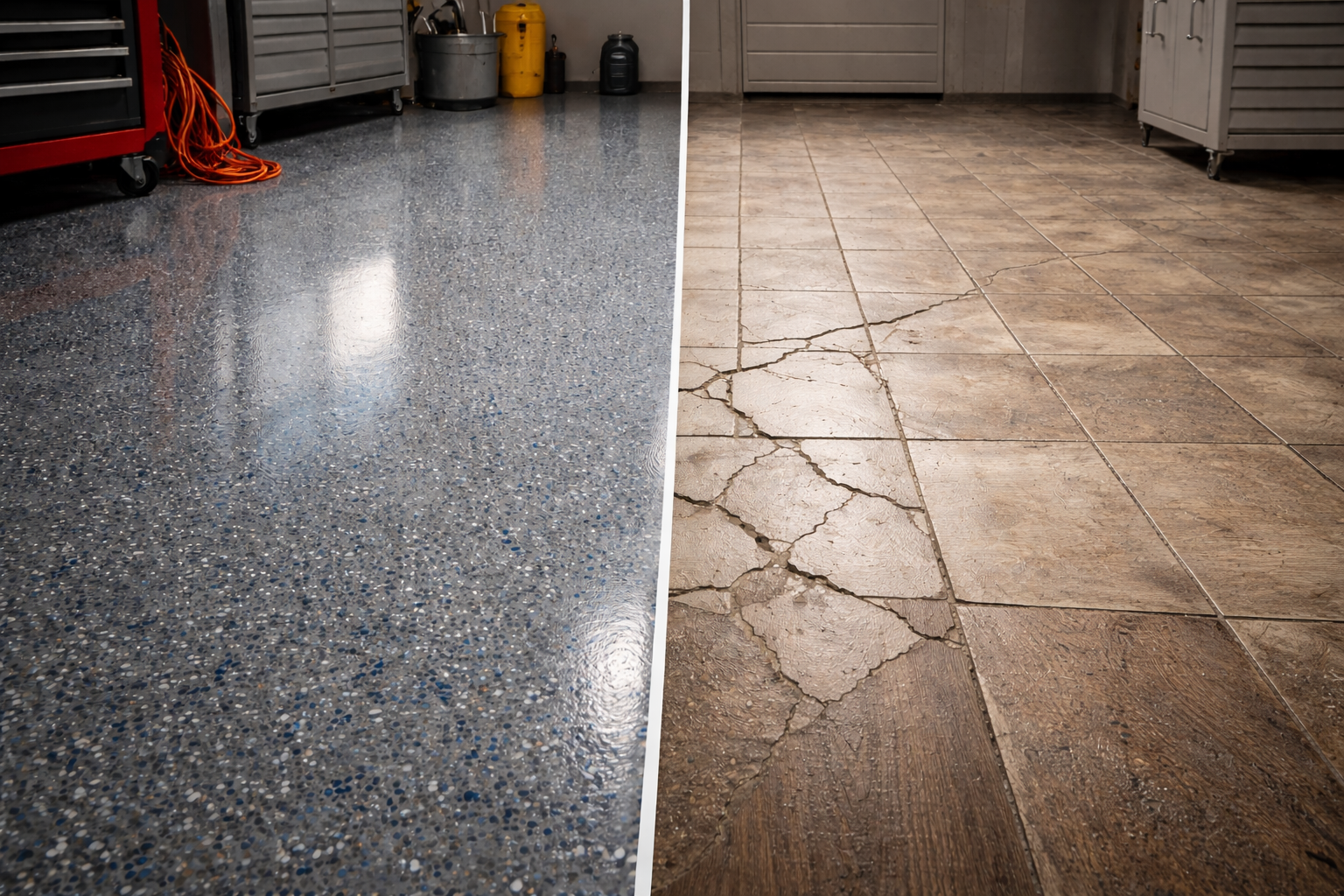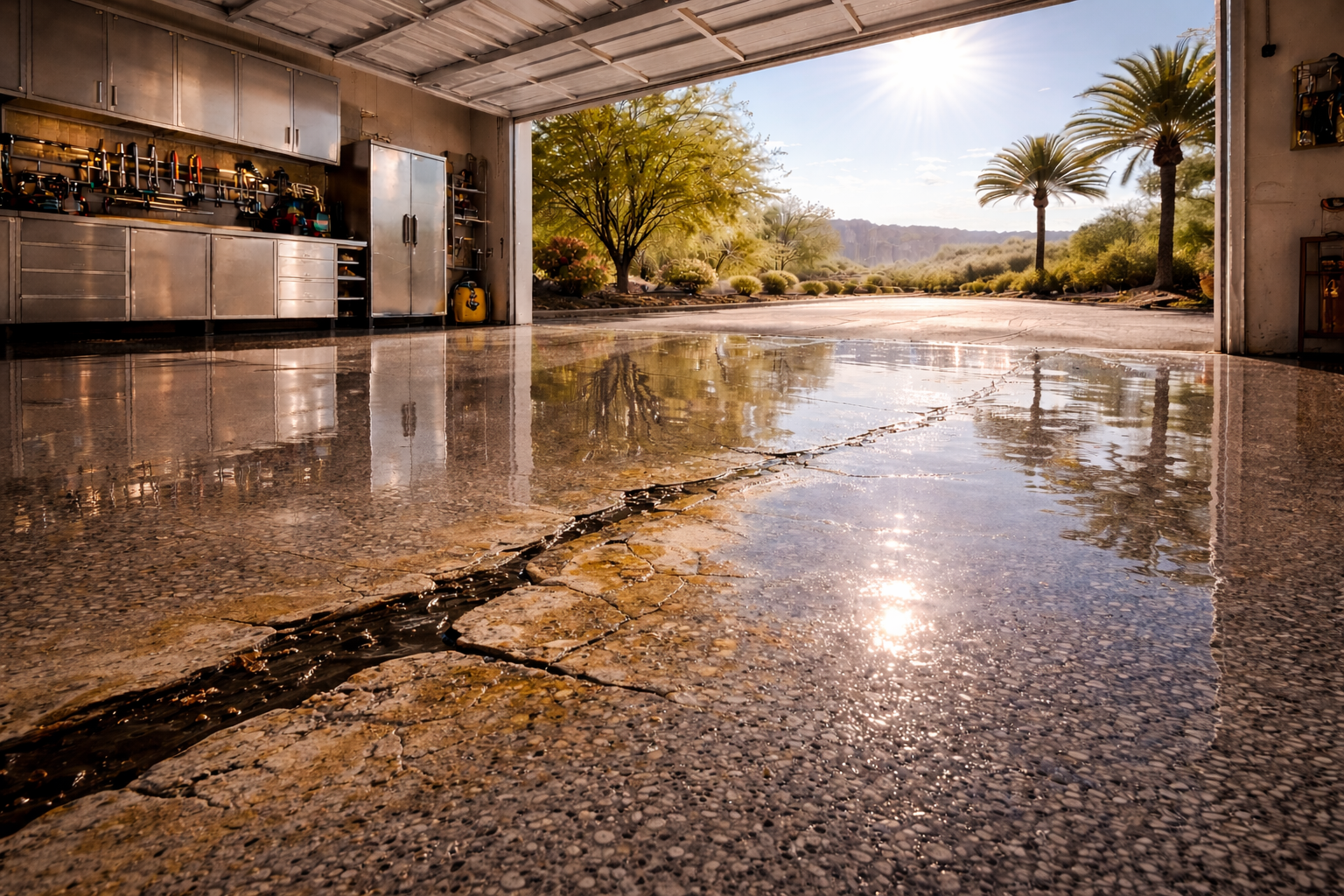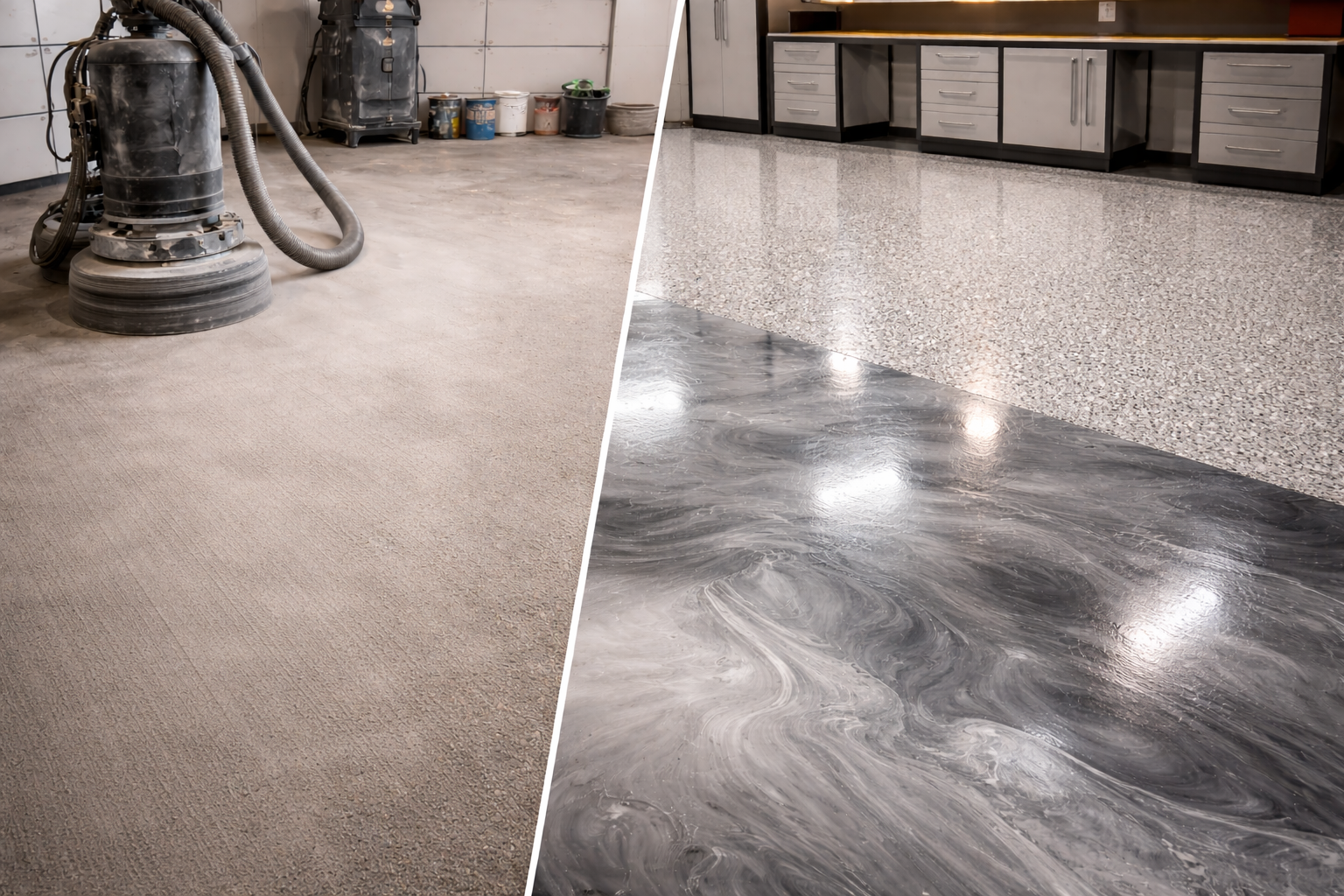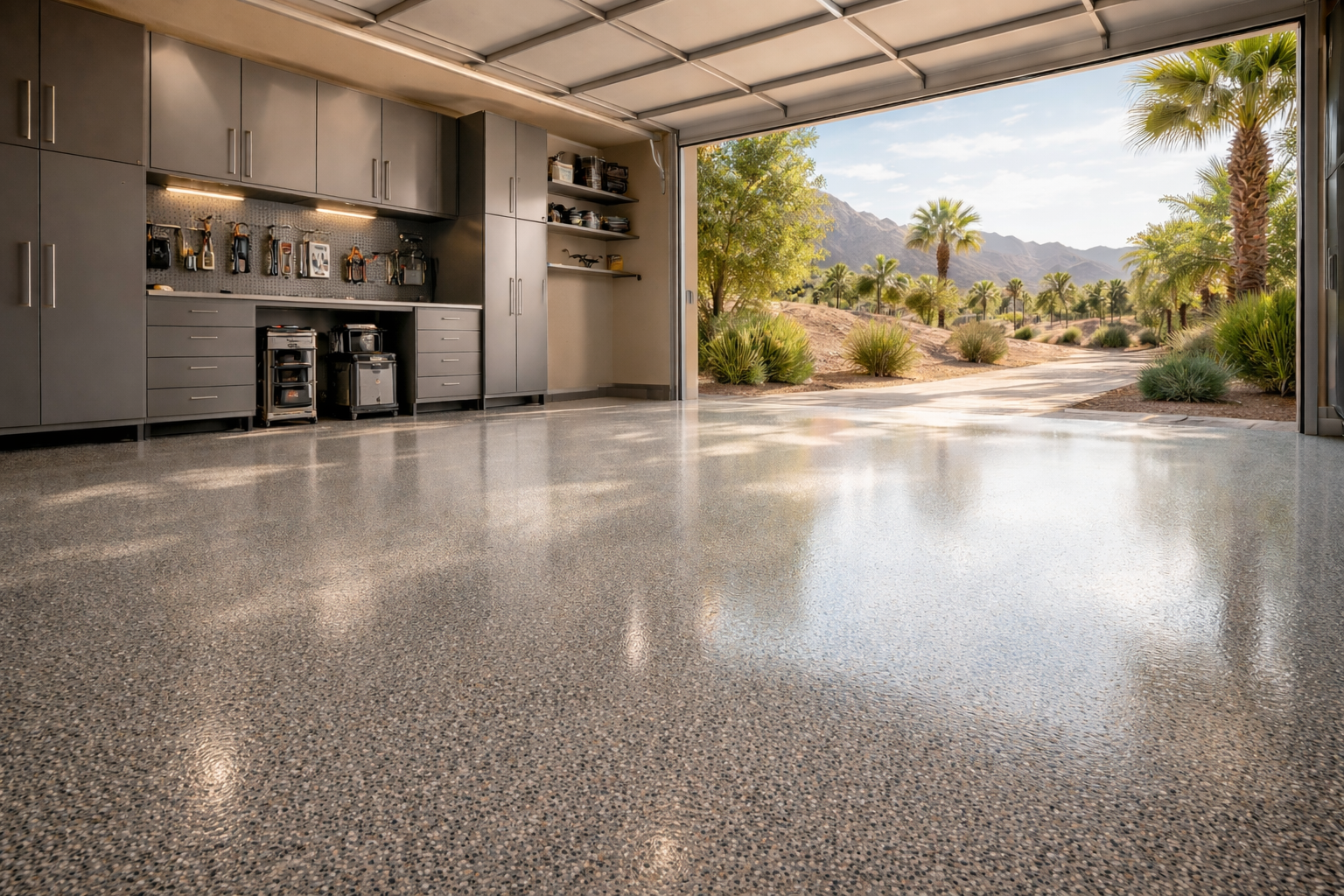
Winter Care Tips for Epoxy Floors That Keep Them Looking Like New
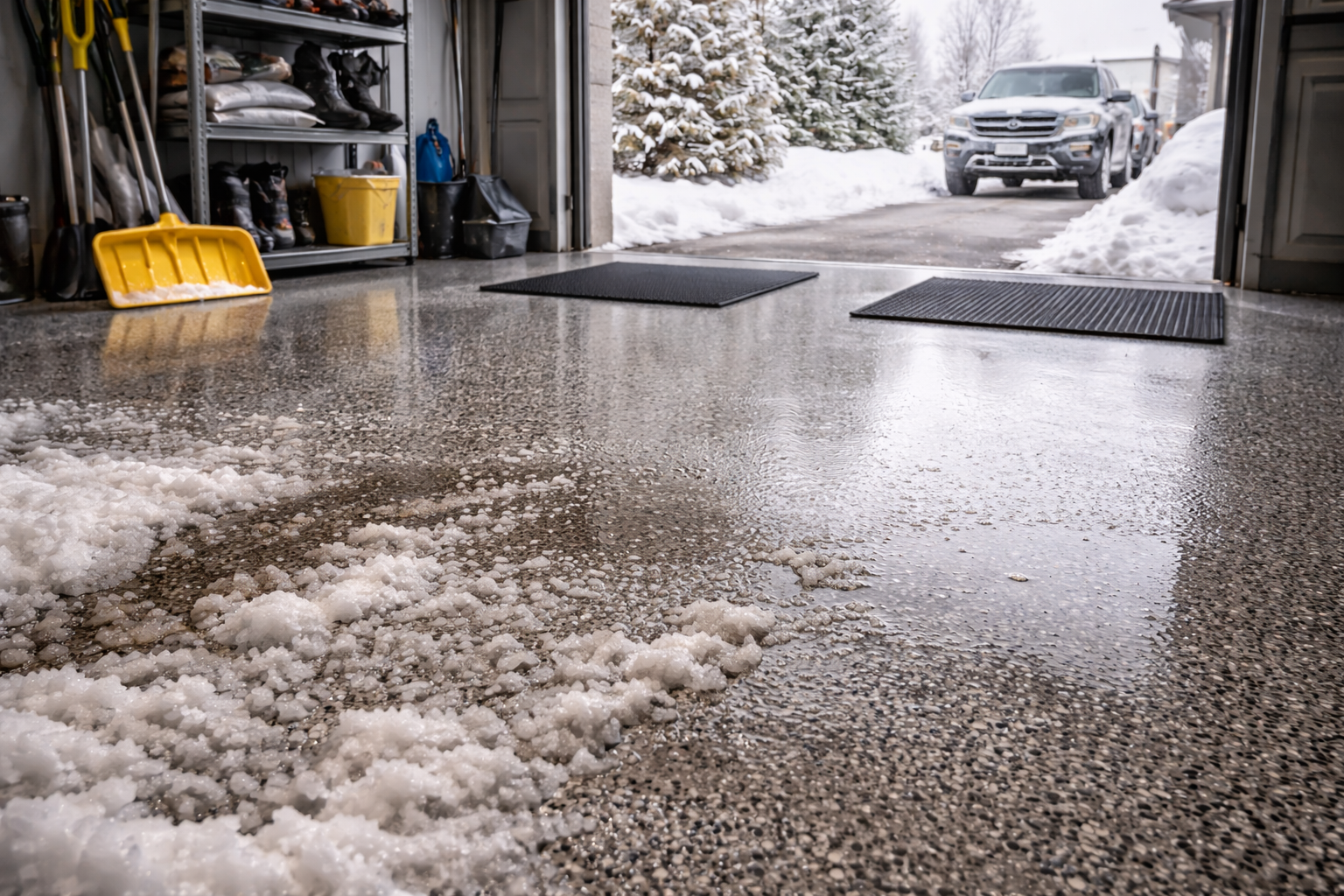
Winter is one of the toughest seasons for floors. Snow, ice melt, road salt, moisture, and temperature swings all take a toll on concrete surfaces. The good news is that epoxy floors are built to handle harsh conditions, but like any high-performance surface, they still benefit from proper seasonal care. With the right winter habits, epoxy floors can maintain their appearance, traction, and durability year after year.
Why Winter Is the Most Demanding Season for Epoxy Floors
During colder months, epoxy floors are exposed to more contaminants than any other time of year. Vehicles track in moisture and salt, boots grind grit into the surface, and temperature changes stress both concrete and coatings.
Without basic winter care, these conditions can lead to:
• Dull or hazy finishes
• Surface abrasion from grit
• Reduced traction
• Premature wear in high-traffic areas
Proper winter maintenance is not about babying your floor. It is about protecting the system so it continues performing exactly as designed.
How Road Salt and Ice Melt Affect Epoxy Flooring
Epoxy floors are highly resistant to chemicals, but constant exposure to de-icing salts can still cause surface wear over time if not addressed. Salt crystals act like sandpaper when walked or driven across repeatedly.
Best practices during winter include:
• Removing salt residue promptly
• Avoiding prolonged puddles near entry points
• Using mats in high-exposure areas
The faster salt and moisture are removed, the longer the topcoat maintains its original sheen and texture.
Daily and Weekly Winter Cleaning Habits That Matter
Winter cleaning does not need to be complicated, but consistency is critical. Letting grime build up during colder months accelerates wear.
Recommended winter cleaning routine:
• Sweep or dust mop frequently to remove grit
• Damp mop as needed using a mild, non-abrasive cleaner
• Avoid harsh chemicals or citrus-based cleaners
Epoxy floors are non-porous, which means contaminants stay on the surface instead of soaking in. Regular cleaning keeps them from acting like abrasives under foot or tire traffic.
Managing Moisture and Puddles on Epoxy Floors
Standing water is common in winter, especially in garages, shops, and commercial entrances. While epoxy handles moisture well, pooling water can create slip hazards and concentrate contaminants.
Simple moisture control steps include:
• Installing entry mats or trench drains
• Squeegeeing excess water after heavy use
• Keeping floor slopes clear for proper drainage
These steps improve safety and help maintain consistent traction throughout the season.
Temperature Changes and Epoxy Floor Performance
Professionally installed epoxy systems are designed to tolerate temperature fluctuations, but sudden thermal shock can still stress inferior coatings.
To protect epoxy floors in winter:
• Avoid blasting frozen floors with very hot water
• Allow gradual temperature changes when possible
• Keep doors closed during extreme cold snaps
Quality epoxy systems remain stable, but avoiding unnecessary thermal extremes helps preserve the bond between the coating and concrete.
Winter Traction Tips for Safer Epoxy Floors
Traction is often a winter concern, especially in garages and commercial spaces. Epoxy floors can be tailored with slip-resistant additives that work year-round, but winter conditions amplify the importance of proper care.
To maintain traction:
• Keep floors clean and free of residue
• Address worn topcoats before winter starts
• Use mats in transition zones
Loss of traction in winter is usually tied to contamination, not the epoxy itself.
Who Needs Winter Epoxy Floor Care the Most
Winter care is especially important for:
• Residential garages
• Auto shops and service bays
• Warehouses with vehicle traffic
• Commercial entrances and showrooms
Any space that sees moisture, vehicles, or heavy foot traffic during winter benefits from proactive maintenance.
What Professional Epoxy Systems Do Differently in Winter
Not all epoxy floors perform the same when temperatures drop. Professional-grade systems use thicker builds, stronger bonding agents, and topcoats designed for real-world abuse.
High-quality epoxy floors:
• Resist salt and chemical damage
• Maintain traction under wet conditions
• Clean easily even in winter grime
This is where professional installation makes a noticeable difference over DIY kits or thin coatings.
Why Homeowners and Businesses Choose Epoxy Don
Epoxy Don installs epoxy floor systems designed for durability, not seasonal shortcuts. Every floor is built to handle real traffic, real weather, and real use. The focus is on long-term performance, whether the floor is in a garage, workshop, or commercial space.
By using professional materials and proper surface preparation, Epoxy Don delivers epoxy floors that continue looking sharp even through harsh winter conditions.
Simple Winter Checklist to Protect Your Epoxy Floor
Before winter hits, take these proactive steps:
• Inspect high-traffic areas for wear
• Refresh cleaning routines
• Add mats where moisture enters
• Schedule maintenance if topcoats show signs of wear
These small actions can extend the life of your epoxy floor significantly.
Protect Your Epoxy Floor This Winter
Winter does not have to be hard on your floors. With proper care and a professionally installed system, epoxy floors can come through the cold season looking as good as they did when first installed.
If you want expert advice or a durable epoxy floor built for year-round performance,
contact Epoxy Don today!
and keep your floors looking like new no matter the season.
Get A No Cost Estimate Today
Check Out Our Other Concrete Coatings Articles:
Coming Soon