Epoxy Flooring Cost Factors - What Affects Your Final Price

Epoxy flooring costs are determined by surface preparation requirements, concrete condition, square footage, coating system type, design complexity, and jobsite logistics. The biggest price differences rarely come from the epoxy itself. They come from the level of preparation and the performance standard you expect.
At Epoxy Don, we approach every project with one principle - the floor must perform as good as it looks. Understanding what truly affects your final price helps you make informed decisions instead of chasing low bids that cut critical corners.
Why Epoxy Flooring Prices Vary So Widely
If you have received multiple quotes, you may have noticed significant price differences. That is not random. Epoxy systems are not one-size-fits-all.
Some contractors price basic roll-on coatings with minimal prep. Others, like Epoxy Don, build systems designed for durability, adhesion, and long-term performance.
The difference often comes down to three core variables: preparation, materials, and protection level.
Concrete Condition - The Foundation of Your Investment
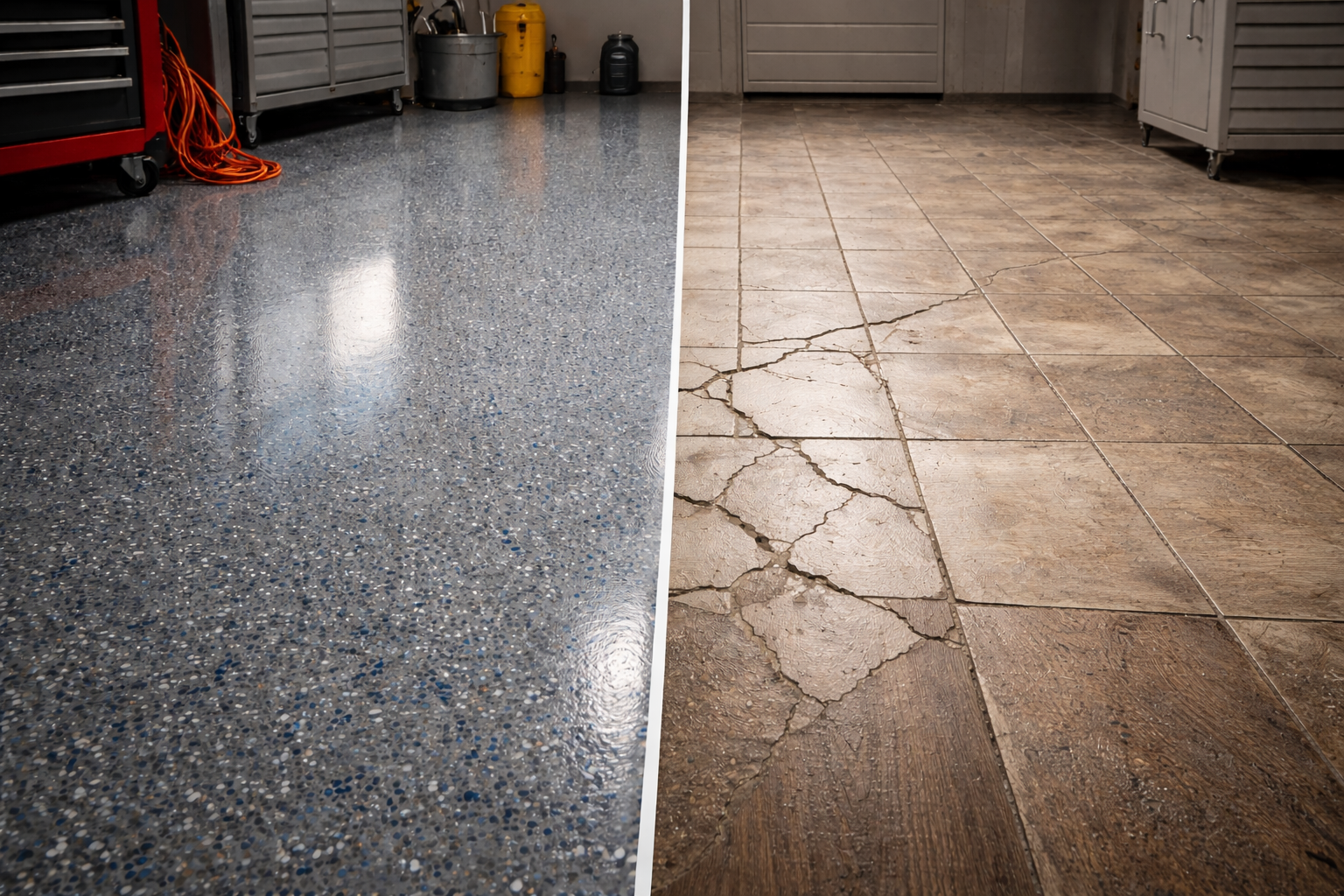
The condition of your existing concrete has the largest impact on cost. Epoxy bonds mechanically to the concrete surface. If the slab is compromised, the coating will fail unless properly corrected.
Issues that increase project cost include:
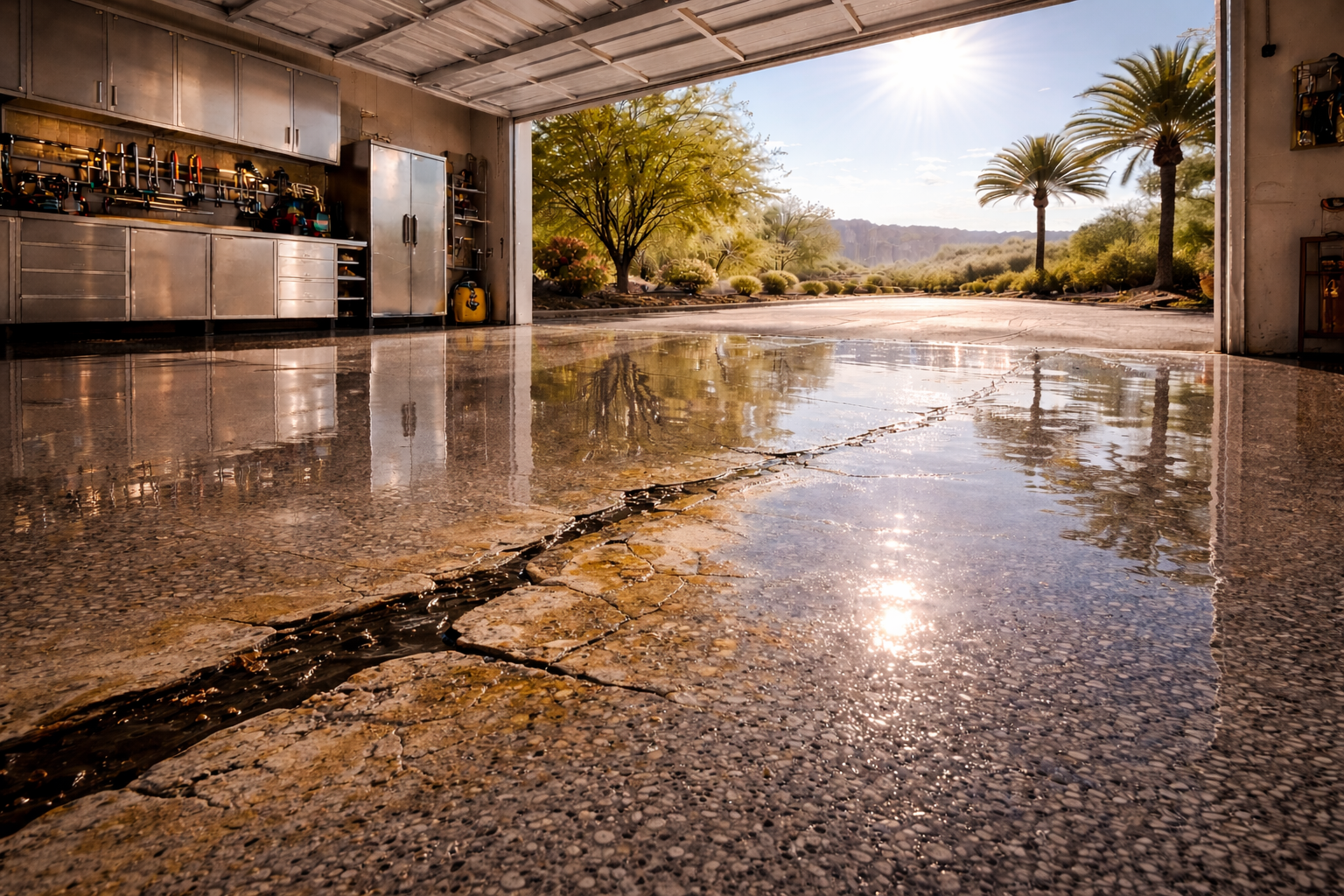
- Cracks that require routing and structural filling
- Spalling or surface deterioration that needs repair
- Moisture vapor transmission that requires mitigation systems
Professional mechanical grinding is non-negotiable for long-term adhesion. Acid etching or light sanding is not a substitute for proper surface profiling. If one estimate includes industrial grinding and another does not, that alone can explain a large pricing gap.
When done correctly, surface prep is the difference between a coating that lasts 15 years and one that peels in 18 months.
Square Footage and Layout Complexity
Larger spaces typically reduce the cost per square foot due to material efficiency and labor scaling. However, layout complexity can offset that advantage.
Garages with stem walls, stairs, tight corners, or built-in cabinetry require additional edge work and precision detailing. Commercial spaces with equipment, drains, or containment requirements also increase labor time.
Open, unobstructed floors are faster to coat. Intricate layouts require craftsmanship and time, both of which affect the final price.
Type of Epoxy System Installed
Not all epoxy systems are built equally. The system you choose directly affects material cost and labor requirements.
Common system tiers include:
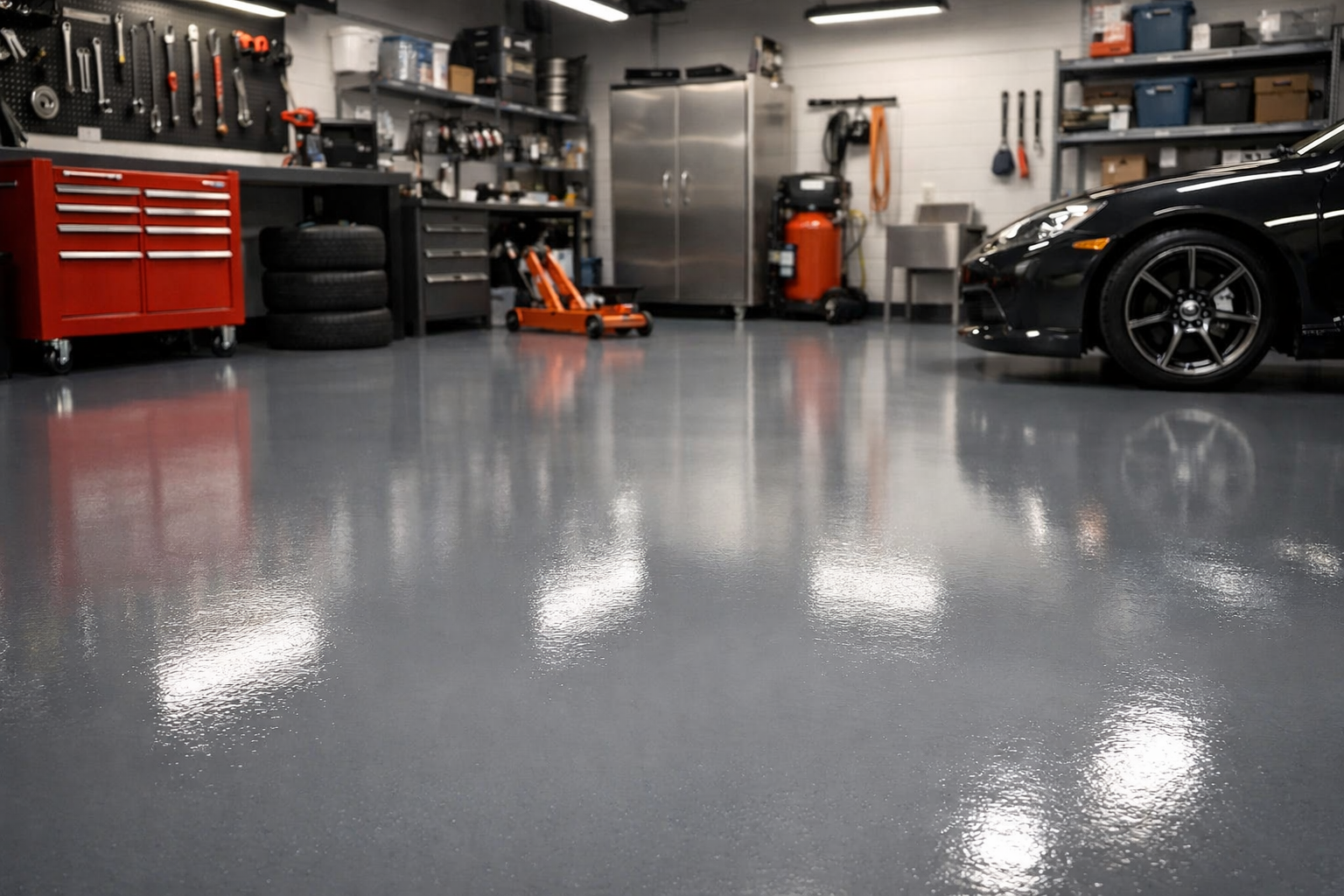
- Standard solid-color epoxy with clear topcoat
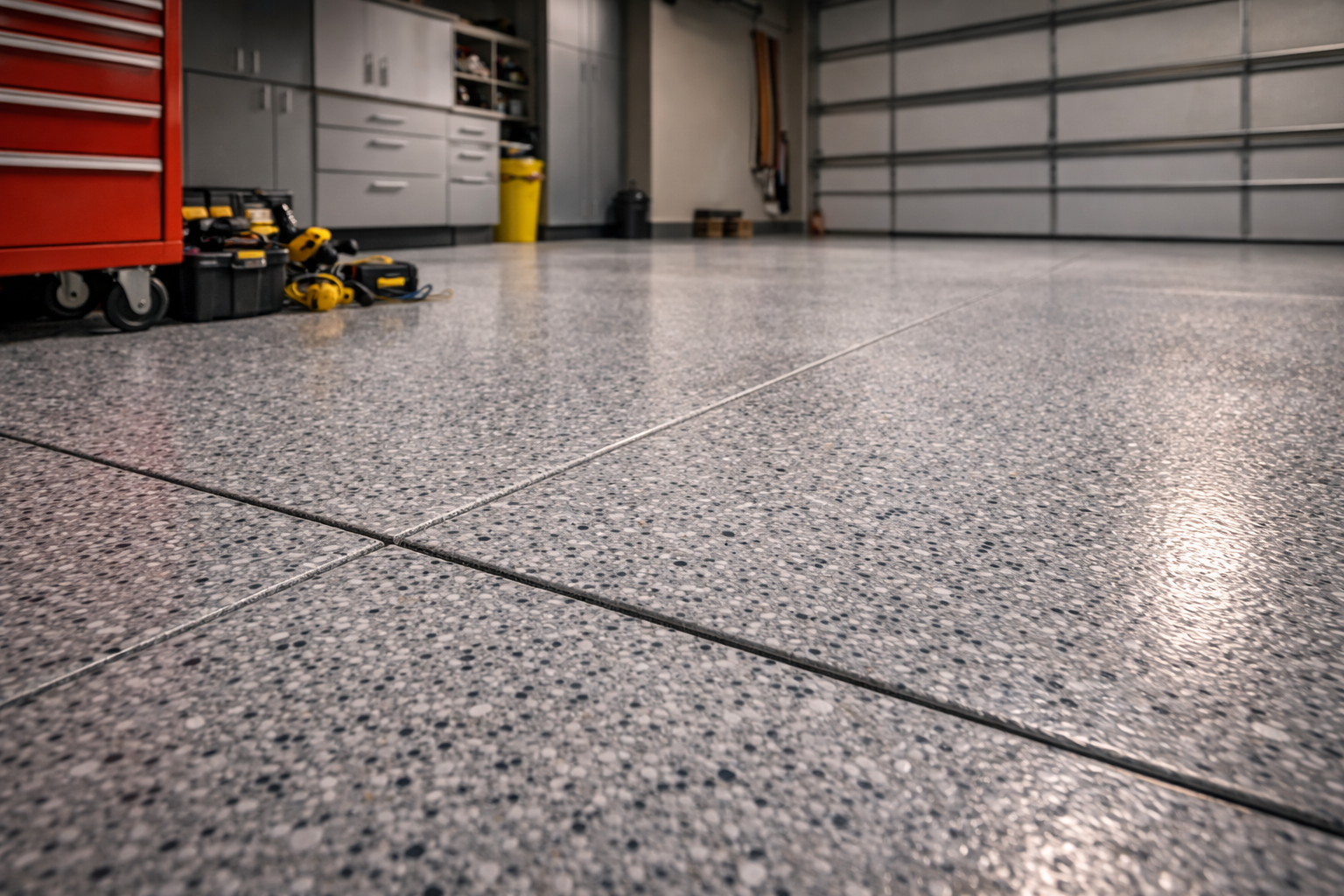
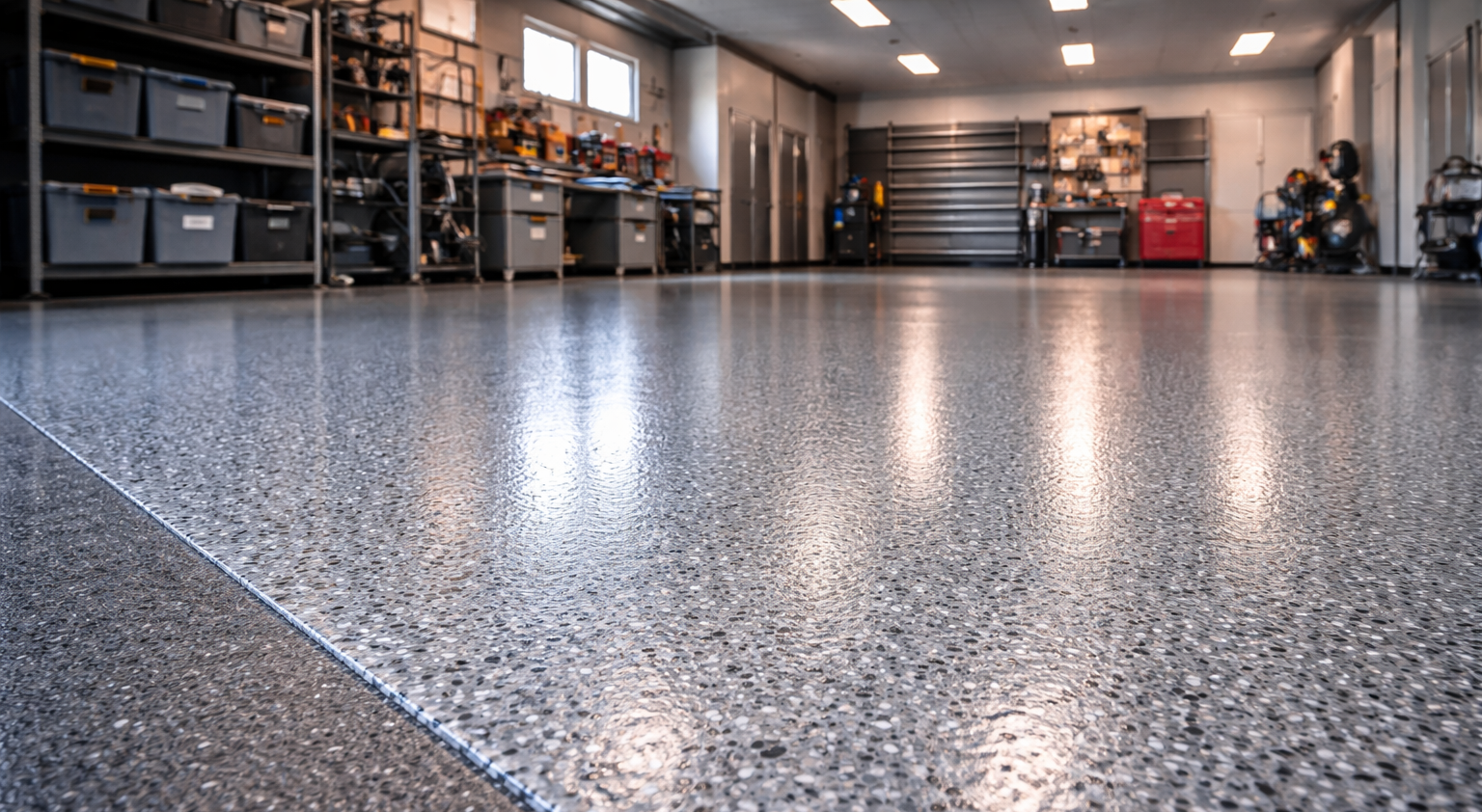
- Decorative flake systems with full broadcast texture
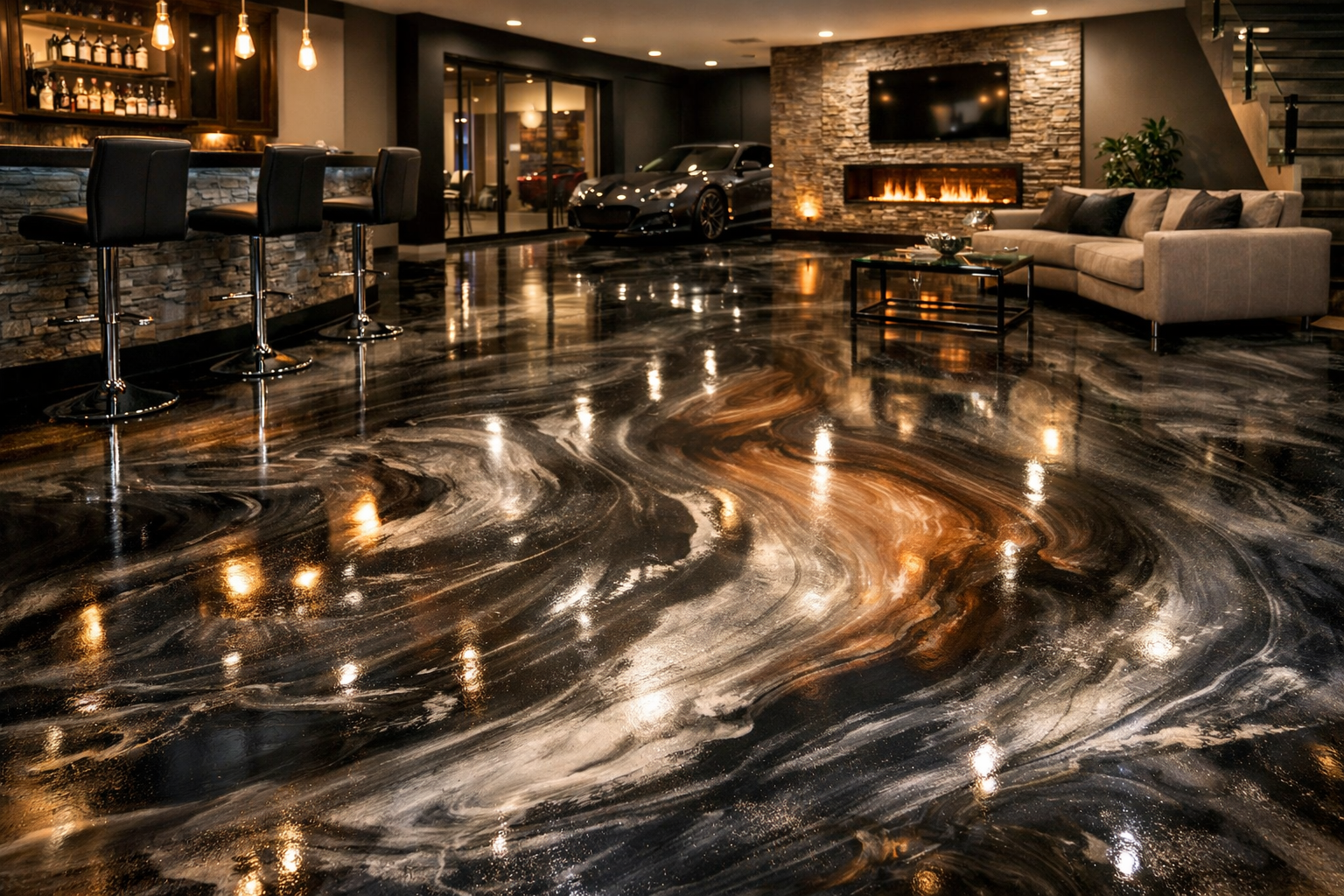
- Metallic epoxy systems with layered visual effects
Decorative flake systems require additional broadcasting, scraping, and sealing steps. Metallic systems demand artistic application and controlled curing conditions.
Higher-end systems also often include polyaspartic or urethane topcoats for enhanced UV resistance and abrasion durability. These upgrades increase upfront cost but significantly improve lifespan and color stability.
At Epoxy Don, we design systems based on how the space will actually be used, not just how it will look on installation day.
Moisture and Environmental Conditions
Moisture is one of the most overlooked cost factors. If your concrete slab emits vapor beyond acceptable limits, a moisture mitigation primer may be required before epoxy installation.
Skipping this step reduces cost upfront but almost guarantees coating failure over time.
Temperature and humidity during installation also influence product selection. Some systems cure differently depending on environmental conditions, requiring specialized formulations.
A properly evaluated site ensures your floor performs under real-world conditions.
Design Customization and Finish Level
Customization impacts price because it impacts labor precision.
Solid-color systems are the most straightforward. Decorative flake floors require full broadcast coverage and additional finishing steps. Metallic epoxy floors demand controlled application patterns and multiple layers to achieve depth and movement.
Additional elements such as custom color blending, cove bases, or anti-slip additives also affect final pricing.
Premium aesthetics require premium execution. That execution takes skill and time.
Garage vs Commercial Epoxy Cost Differences
Residential garage floors and commercial spaces have different demands.
Garages typically require impact resistance, chemical protection, and aesthetic finish quality. Commercial environments may require higher build thickness, slip resistance ratings, or compliance with safety standards.
Commercial kitchens, warehouses, and retail spaces often demand more robust systems than a standard residential installation. These requirements influence both material cost and application complexity.
What Professional Epoxy Installation Includes
A true professional epoxy installation includes mechanical surface grinding, crack and surface repair, moisture testing, base coat application, decorative layer if selected, and a protective topcoat.
It also includes:
- Proper cure timing between coats
- Detailed edge work and transitions
- Final inspection for uniform coverage
When you compare quotes, confirm that each of these steps is included. Lower bids often exclude key preparation phases or use thinner material builds.
At Epoxy Don, we do not compete on shortcuts. We compete on durability and design integrity.
How to Budget Realistically for Epoxy Flooring
If you are planning an epoxy flooring project, approach budgeting strategically:
- Have the concrete evaluated before requesting final pricing
- Clarify the system build thickness and topcoat type
- Ask about moisture testing and preparation standards
Transparent discussions upfront prevent surprise upgrades mid-project.
A professionally installed epoxy system should be viewed as a long-term surface solution, not a temporary coating. Investing properly at installation reduces maintenance, repairs, and premature replacement.
Frequently Asked Questions About Epoxy Flooring Costs
Why is professional grinding necessary?
Mechanical grinding creates the surface profile required for proper adhesion. Without it, epoxy can delaminate.
Is metallic epoxy more expensive?
Yes. It requires additional labor, controlled application techniques, and multiple layers.
Does square footage always lower cost per foot?
Generally yes, but complex layouts or heavy repair needs can offset that advantage.
Is moisture testing really necessary?
Absolutely. Moisture-related failure is one of the most common causes of epoxy breakdown.
Why Homeowners and Businesses Choose Epoxy Don
Epoxy flooring is not paint. It is a performance system. The final price reflects preparation standards, material quality, and craftsmanship.
Epoxy Don delivers high-durability installations designed to withstand real-world use while elevating the visual impact of your space. We combine design expertise with structural preparation to ensure your investment performs for years.
If you are considering epoxy flooring, schedule a consultation with Epoxy Don today. Get a clear, honest evaluation of your surface and a system designed for long-term durability and style.
Get A No Cost Estimate Today
Check Out Our Other Concrete Coatings Articles:
Coming Soon