How Epoxy Floors Hold Up Against Chemicals and Spills
Epoxy flooring is often chosen for its appearance and durability, but one of its most valuable advantages is how well it resists chemicals and spills. In garages, workshops, commercial spaces, and industrial environments, floors are exposed to everything from oil and gasoline to cleaners, solvents, and corrosive substances. Epoxy floors are engineered to withstand these challenges while maintaining their strength and finish over time.
For property owners who need a floor that performs under real-world conditions, epoxy delivers a level of chemical resistance that traditional flooring materials simply cannot match.
Why Chemical Resistance Matters in Real-World Spaces
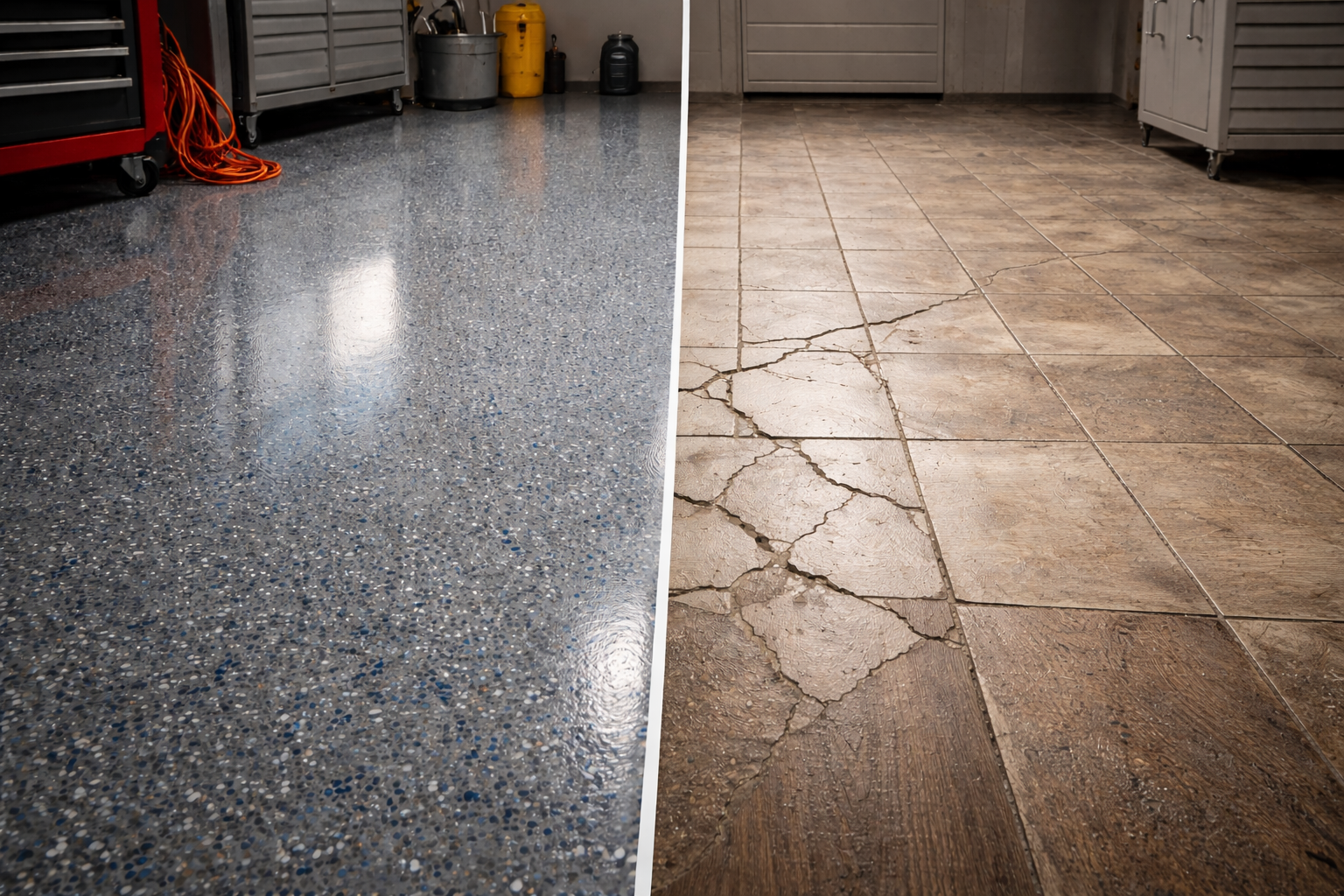
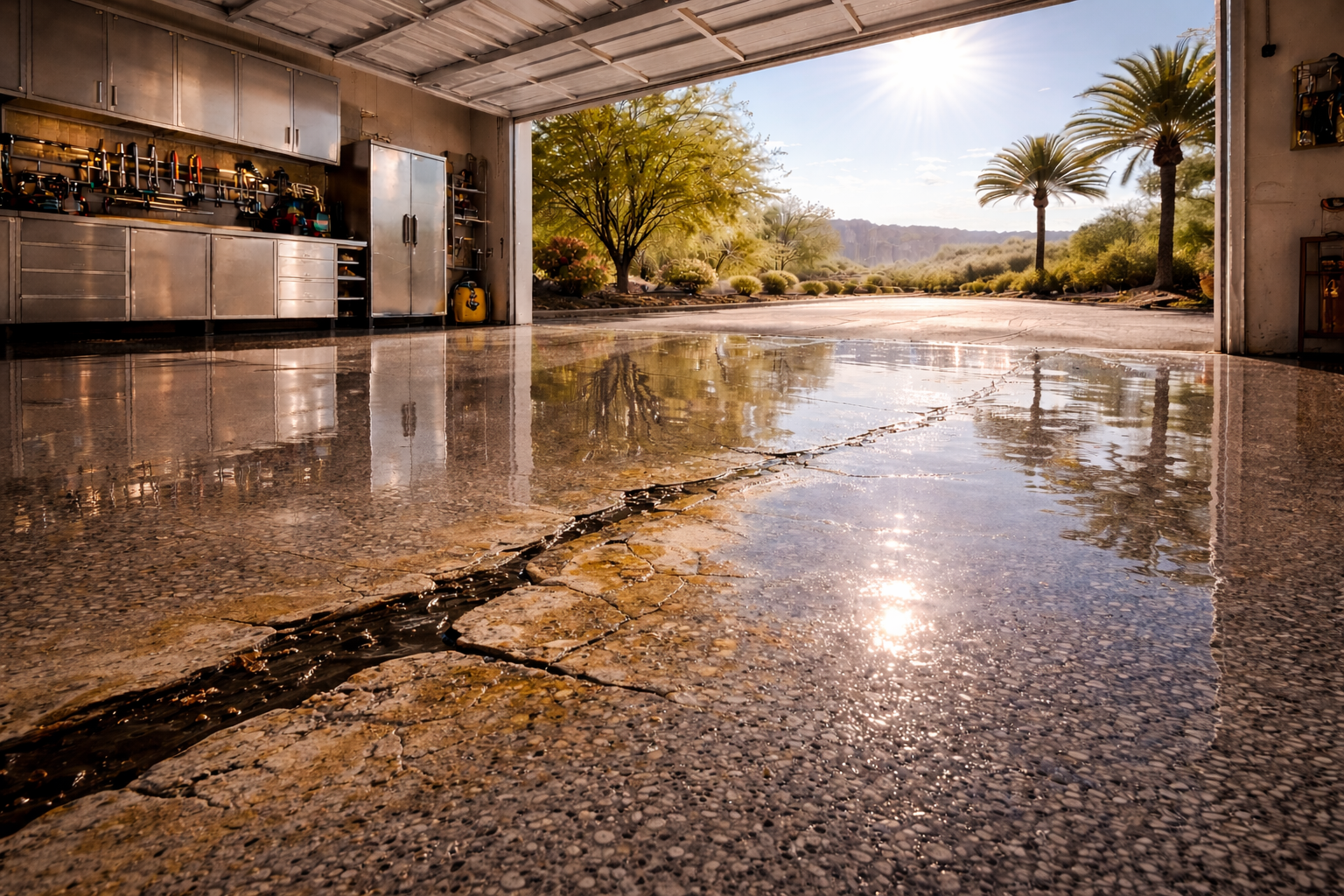
Concrete by itself is porous. When chemicals spill onto untreated concrete, they soak in quickly, leading to staining, surface breakdown, and long-term structural damage. Once contaminants penetrate the slab, they are difficult or impossible to fully remove.
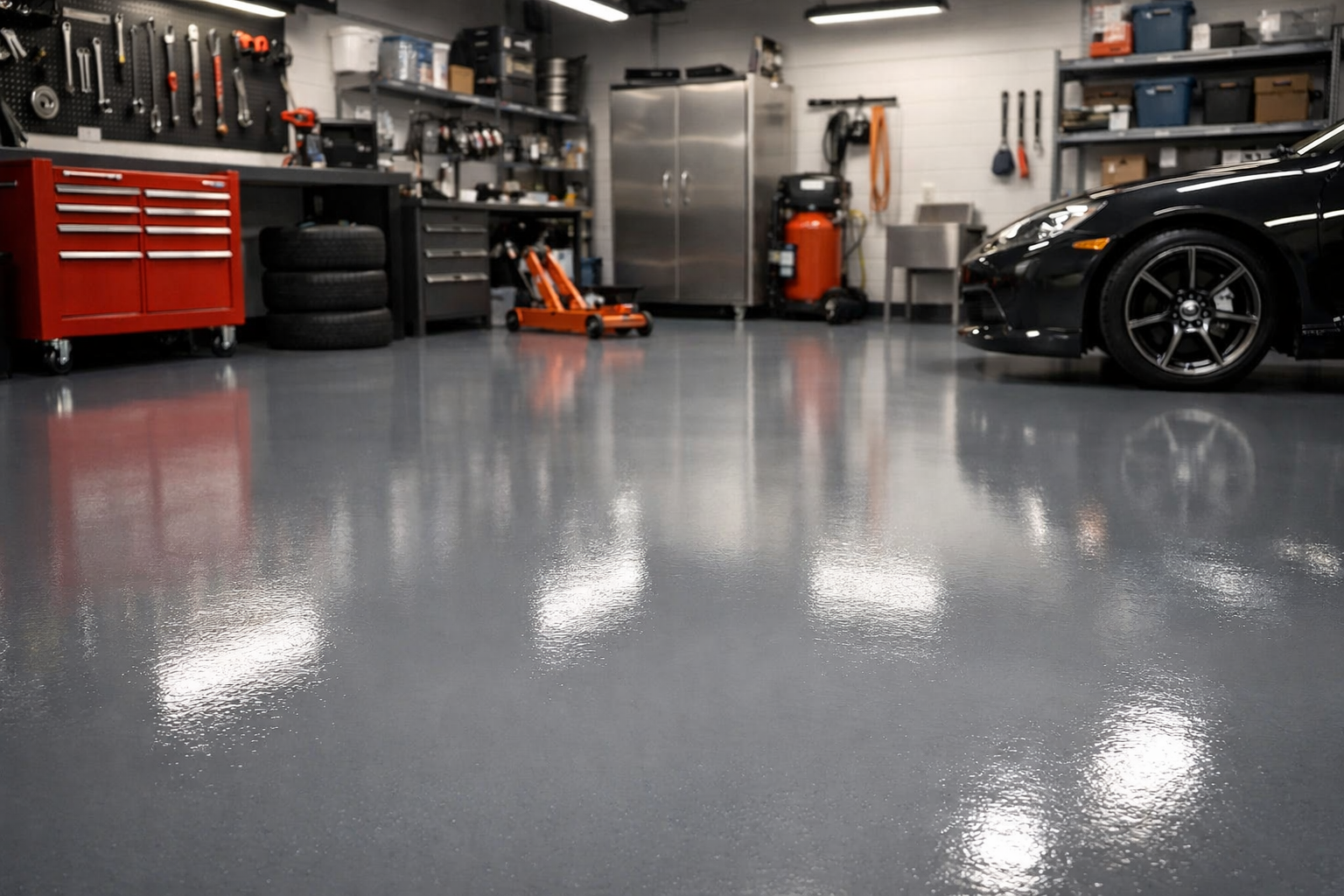
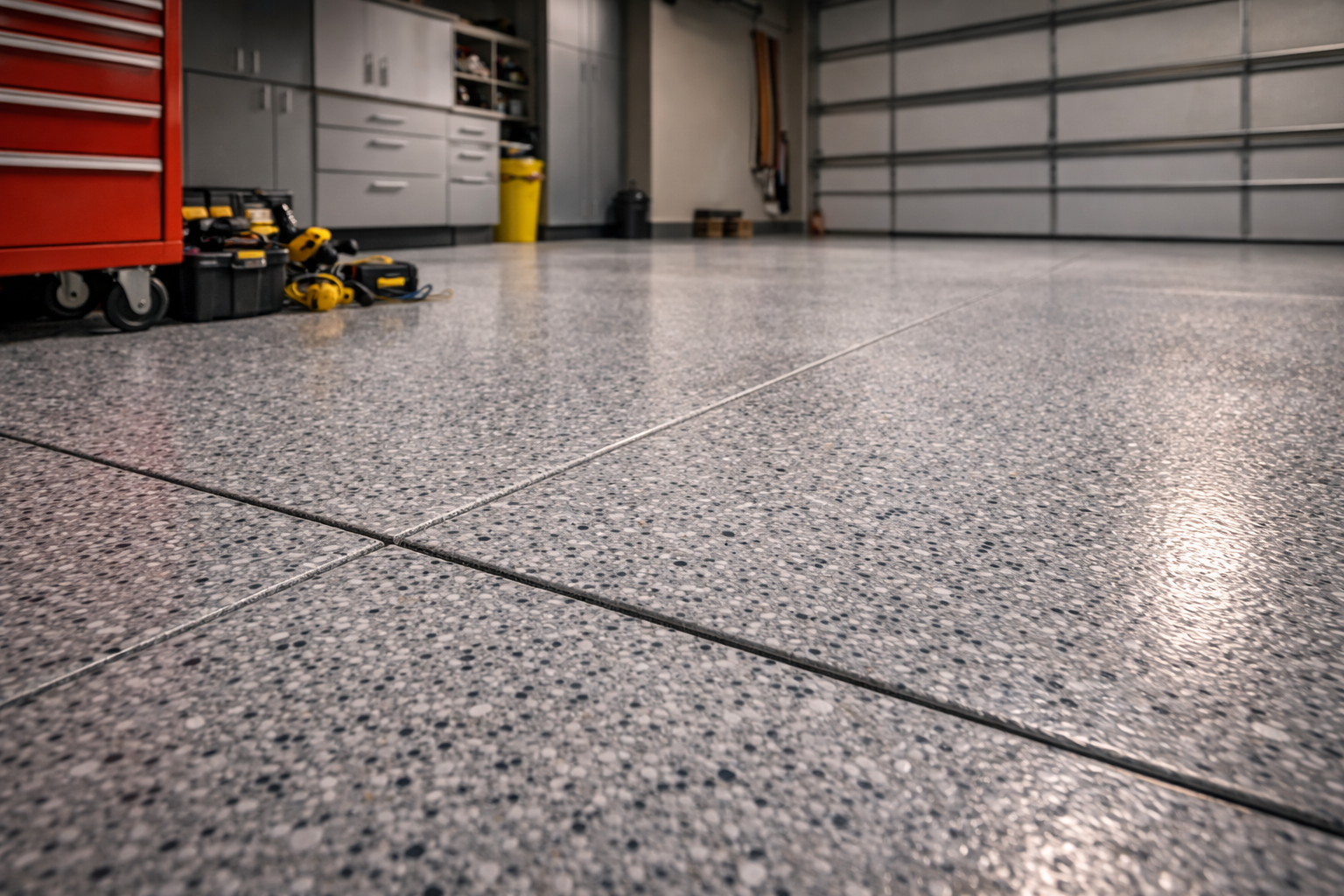
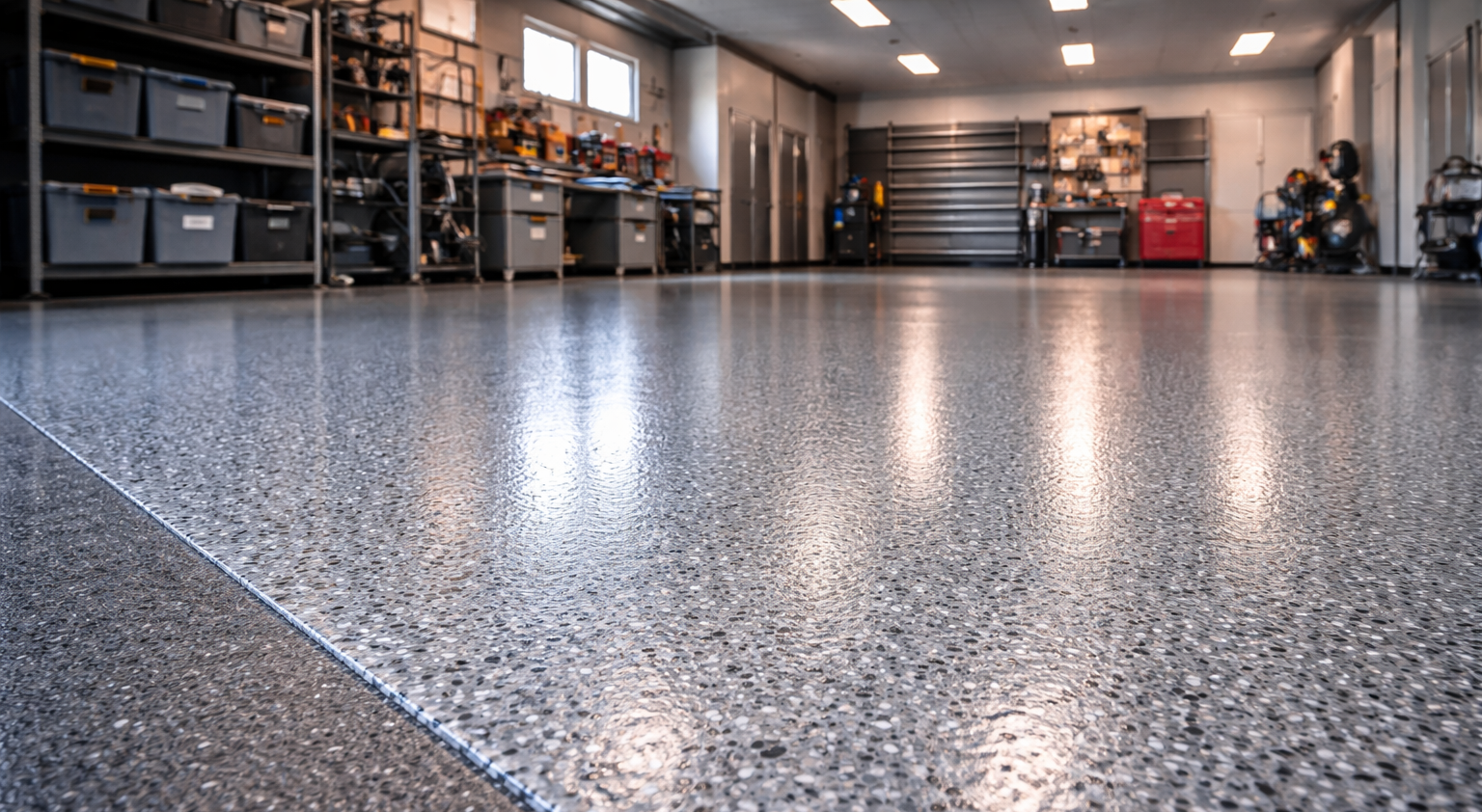
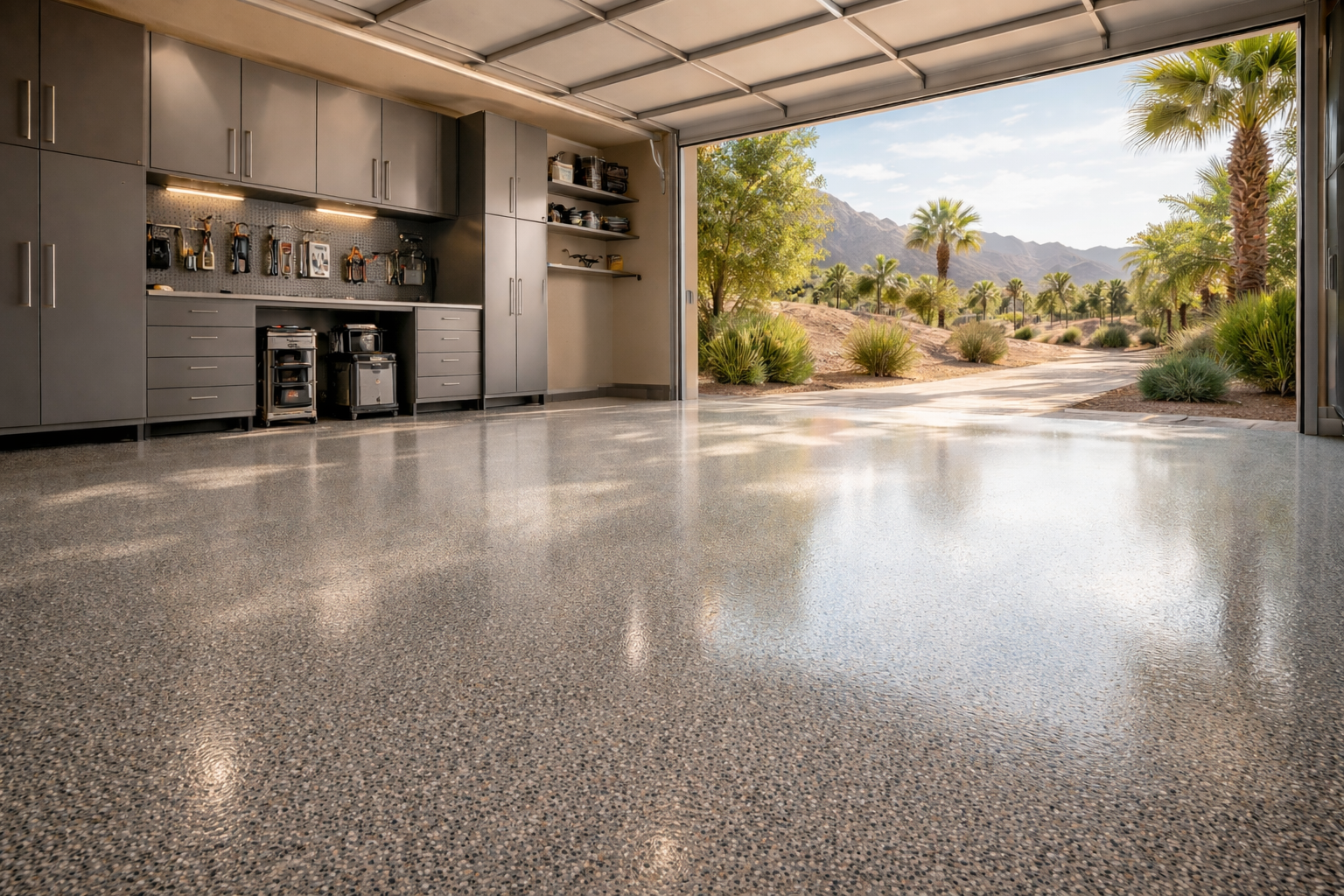
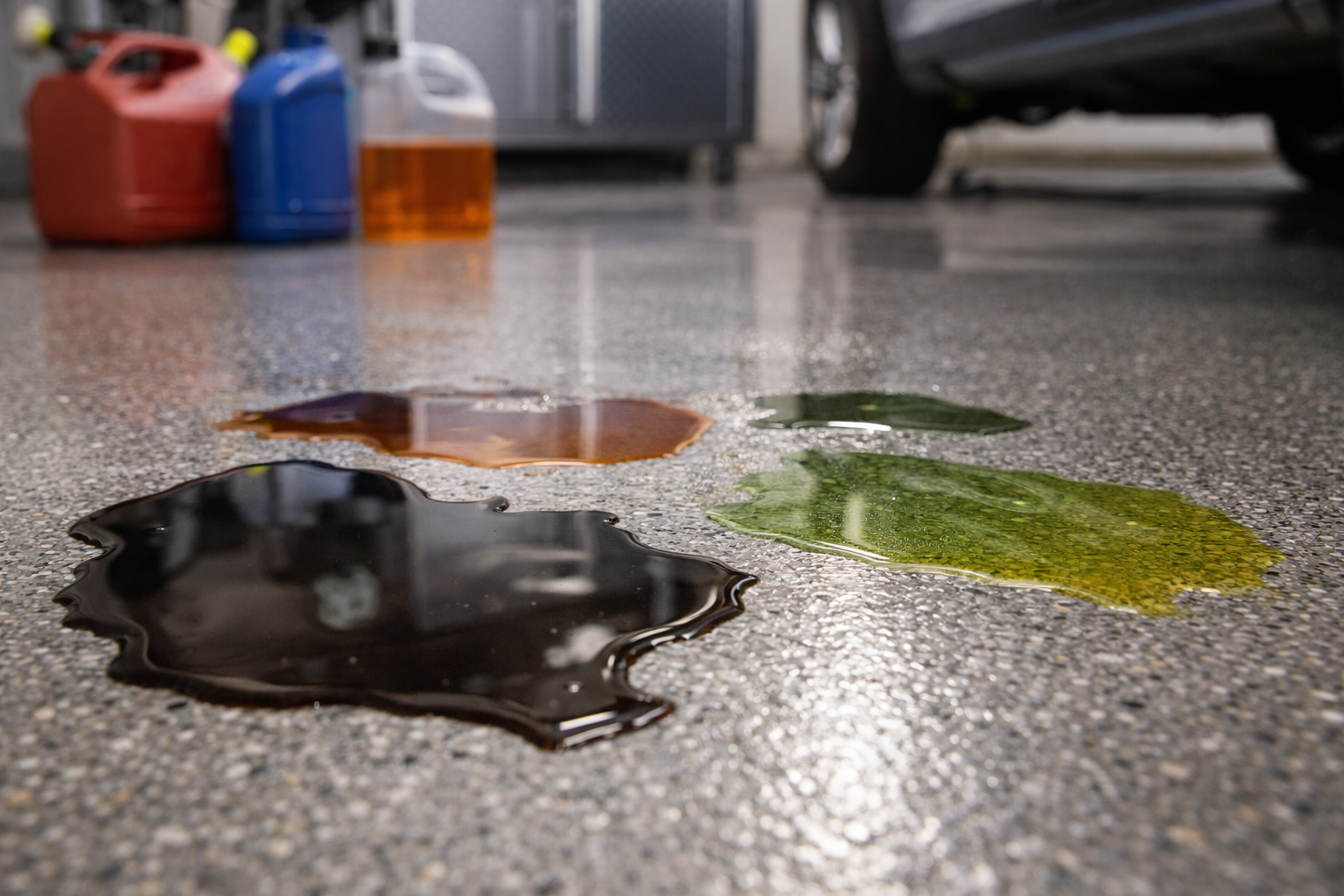
Epoxy creates a seamless, non-porous surface that acts as a barrier between chemicals and the concrete below. This protective layer prevents absorption, allowing spills to remain on the surface where they can be cleaned up before damage occurs.
This matters most in spaces where exposure is routine, not accidental.
How Epoxy Resists Common Household and Commercial Chemicals
Properly installed epoxy flooring is resistant to a wide range of substances, including:
• Motor oil and transmission fluid
• Gasoline and diesel fuel
• Brake fluid and hydraulic fluids
• Household cleaners and degreasers
• Acids and alkalis used in commercial settings
Instead of soaking in, these substances sit on the surface. The epoxy coating maintains its integrity, color, and adhesion when exposed to repeated spills.
This resistance is not temporary. High-quality epoxy systems are formulated to withstand long-term chemical exposure without softening, peeling, or discoloring.
What Makes Epoxy Different From Other Floor Coatings
Not all coatings are equal. Paint and low-grade sealers may offer short-term protection, but they break down quickly when exposed to chemicals. Epoxy is a chemically cured system that forms a hard, bonded layer over the concrete.
Once cured, epoxy becomes:
• Dense and non-porous
• Highly resistant to chemical attack
• Structurally bonded to the slab
• Capable of handling repeated exposure
This is why epoxy is used in industrial plants, laboratories, and commercial garages where chemical resistance is non-negotiable.
How Spills Affect Epoxy Over Time
While epoxy is highly resistant, performance depends on proper installation and material selection. High-quality epoxy floors are designed to handle frequent spills without degradation.
Spills that are cleaned in a reasonable time frame typically leave no trace. Even when chemicals sit on the surface temporarily, the epoxy coating prevents penetration and protects the slab underneath.
In contrast, untreated concrete begins deteriorating immediately after exposure.
Why Installation Quality Determines Chemical Resistance
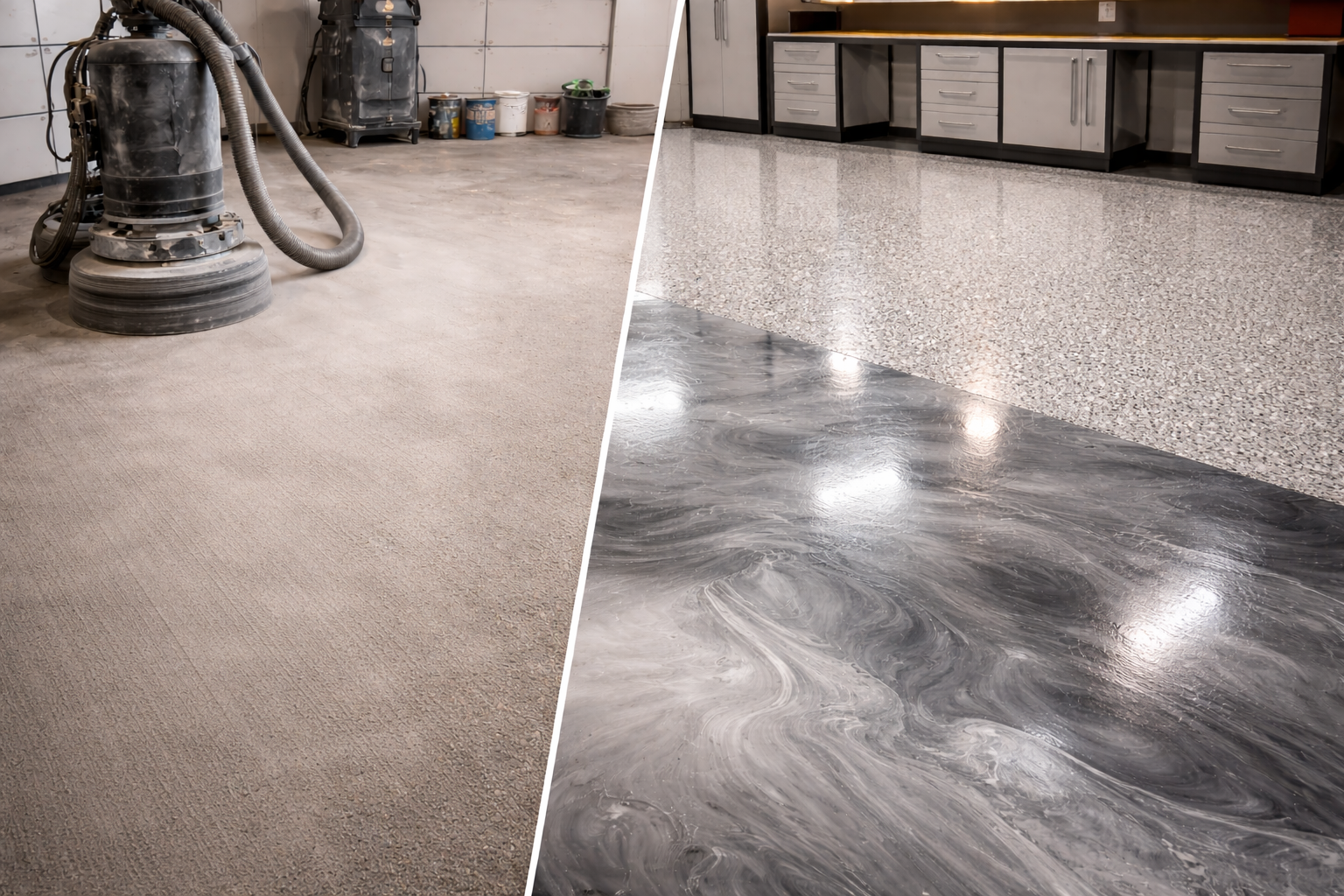
Chemical resistance is only as good as the installation. Surface preparation, moisture testing, and proper mixing all play critical roles in performance.
If epoxy is applied over poorly prepared concrete, contaminants can interfere with bonding. Improper curing can also weaken resistance, allowing chemicals to soften or stain the surface.
Epoxy Don approaches every installation with a craftsman mindset, focusing on preparation, material quality, and application precision to ensure the floor performs as intended under real conditions.
Where Chemical-Resistant Epoxy Floors Perform Best
Epoxy floors are ideal for spaces such as:
• Residential garages
• Automotive shops
• Warehouses and workshops
• Commercial kitchens and service areas
• Industrial and manufacturing facilities
In these environments, spills are inevitable. Epoxy ensures those spills do not become permanent damage.
How Maintenance Supports Long-Term Performance
Epoxy floors are low maintenance, but proper care extends chemical resistance even further. Routine cleaning removes residue that could otherwise build up over time.
Simple maintenance practices include:
• Wiping spills promptly
• Using non-abrasive cleaners
• Avoiding harsh scraping tools
• Periodic inspections for wear
When cared for properly, epoxy floors maintain their chemical resistance and appearance for many years.
Why Clients Choose Epoxy Don
Epoxy Don is known for delivering floors that are not only visually striking but engineered for durability. Each project balances design, performance, and long-term reliability. Chemical resistance is not an afterthought - it is built into every system from the ground up.
From garages to commercial spaces, Epoxy Don installs floors designed to handle spills, abuse, and demanding conditions without compromise.
Protect Your Space With a Floor Built to Last
If your concrete floor is exposed to chemicals, oil, or frequent spills, epoxy is one of the most reliable solutions available.
Epoxy Don provides expertly installed epoxy flooring that resists damage, protects your slab, and elevates your space.
Schedule a consultation today and invest in a floor that works as hard as you do.
Get A No Cost Estimate Today
Check Out Our Other Concrete Coatings Articles:
Coming Soon