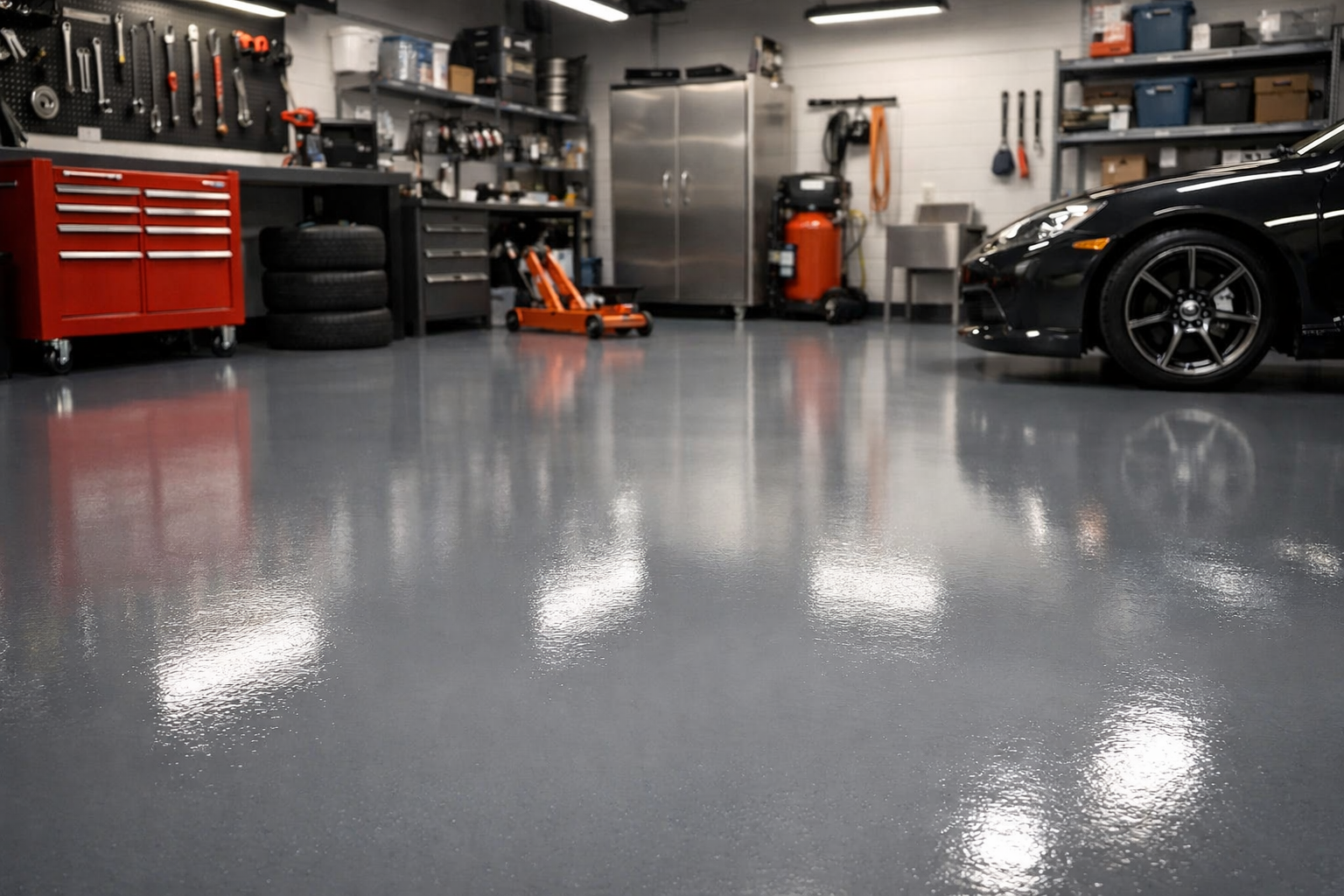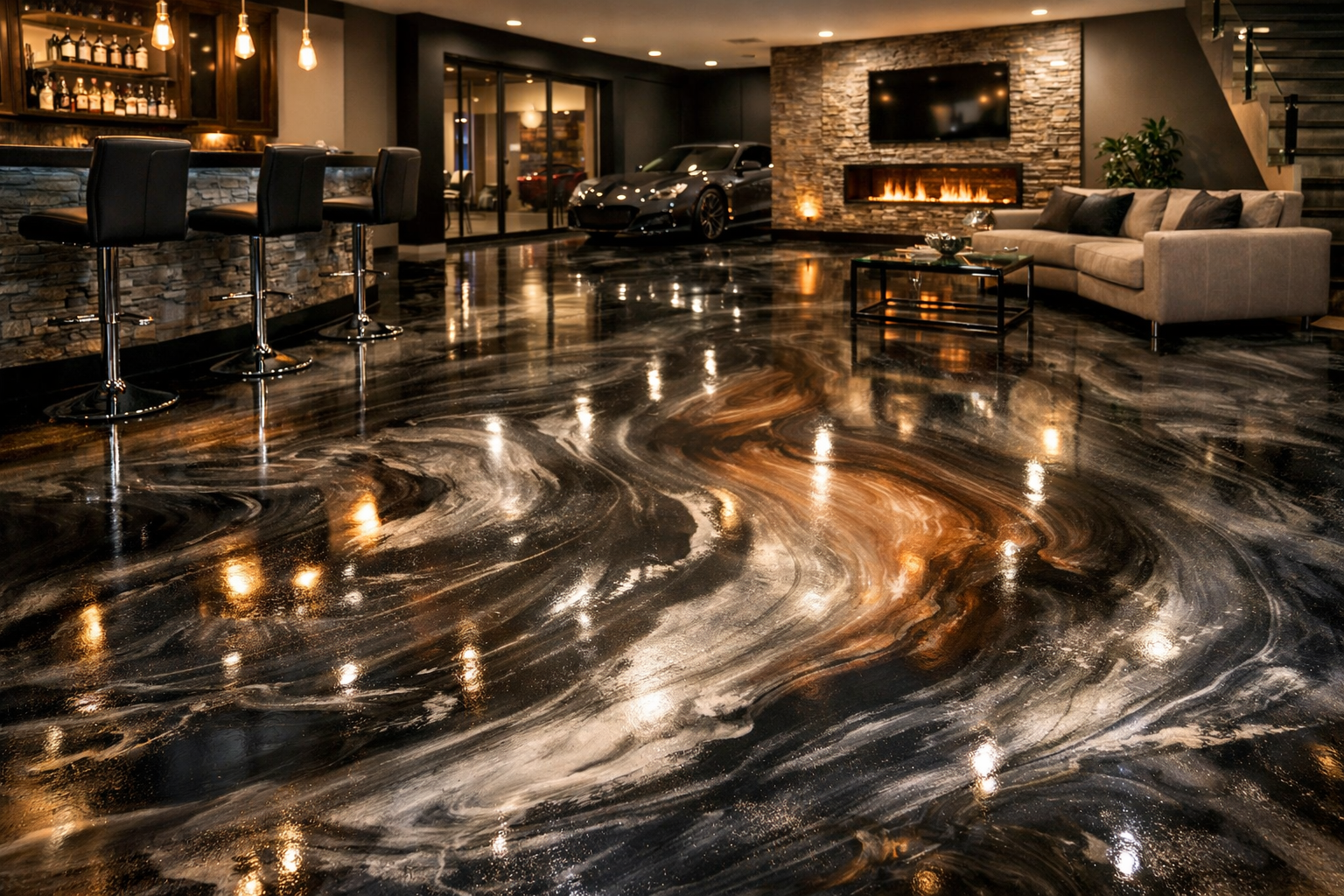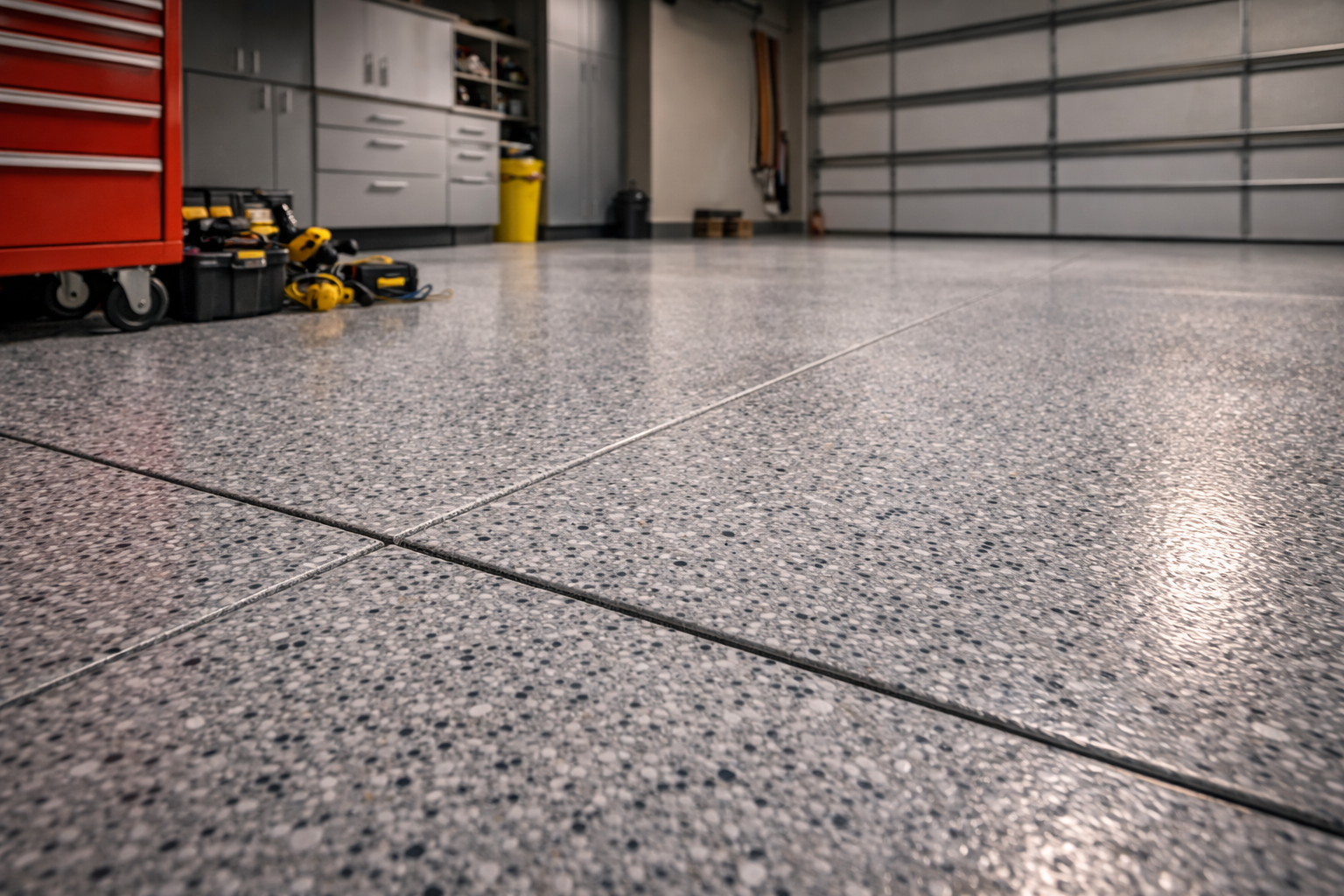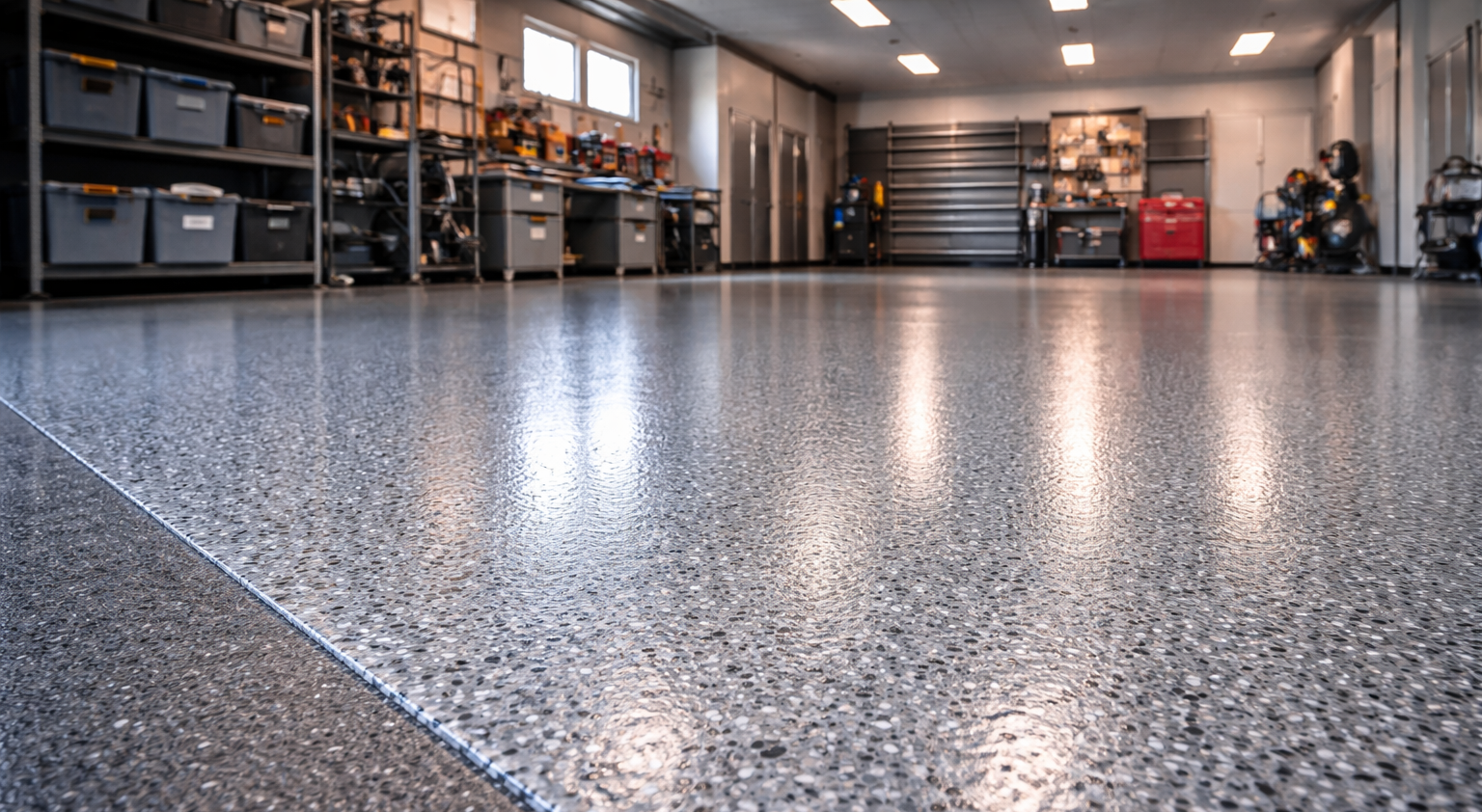
Summer in Nevada - Protecting Epoxy Floors from Extreme Heat
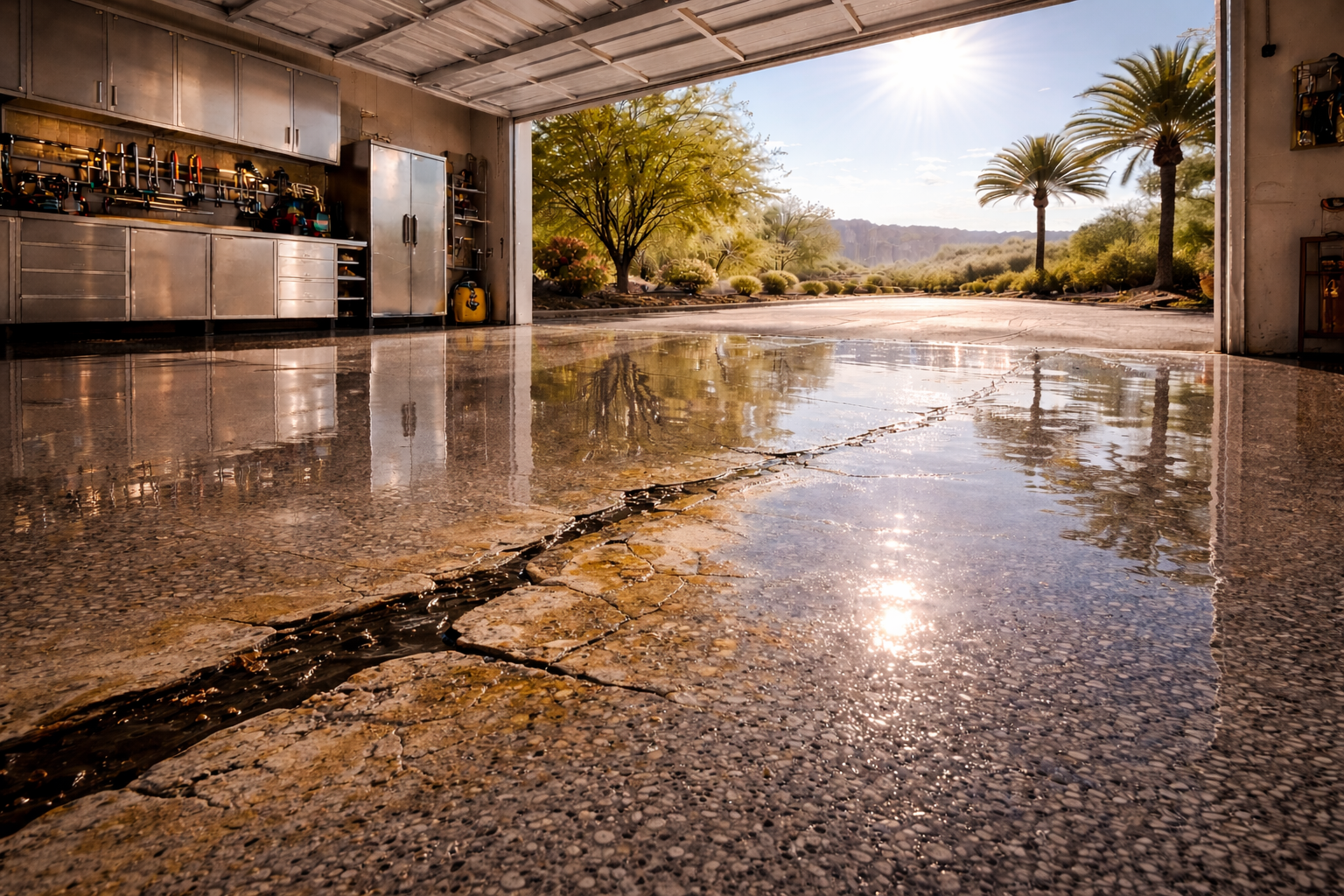
Nevada summers are no joke. When outdoor temperatures climb well past 100 degrees, garages, workshops, and commercial spaces can heat up quickly. For property owners with epoxy flooring, the extreme desert climate raises an important question - can intense heat damage an epoxy floor?
The good news is that professionally installed epoxy flooring is designed to handle high temperatures. However, extreme heat, UV exposure, and rapid temperature swings can still affect performance if the floor is not properly installed or maintained.
Understanding how epoxy reacts to heat helps property owners protect their investment and keep their floors looking great through even the hottest Nevada summers.
How Heat Affects Epoxy Flooring Systems
Epoxy flooring is created through a chemical reaction between resin and hardener. When mixed and applied correctly, these components cure into a rigid, highly durable surface that bonds directly to the concrete substrate.
Once cured, epoxy floors can tolerate substantial heat. Most professional grade systems can easily withstand temperatures far beyond what indoor environments typically reach. However, heat still influences how the floor performs over time.
Extreme temperatures can cause the concrete slab beneath the epoxy to expand and contract. Since epoxy bonds tightly to the concrete surface, these movements can place stress on the coating. In well installed systems, the bond strength is strong enough to handle these changes. Poor preparation or improper installation, however, can lead to peeling or delamination under thermal stress.
This is one of the main reasons professional installation matters so much in Nevada's climate.
UV Exposure - The Hidden Threat in Desert Garages
While epoxy handles heat well, ultraviolet light presents a different challenge. Many standard epoxy coatings are not naturally UV stable. Prolonged exposure to direct sunlight can cause yellowing, fading, or chalking over time.
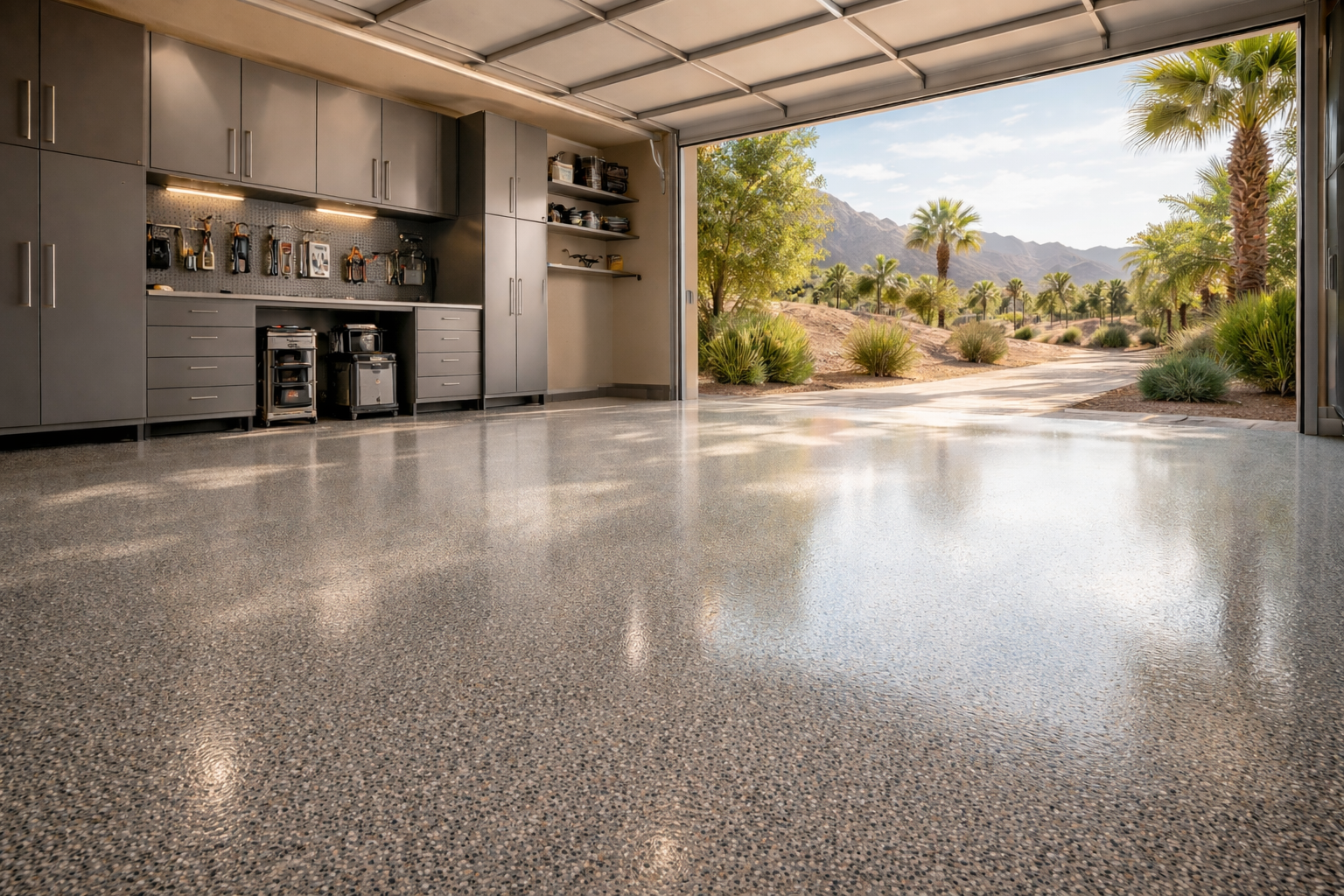
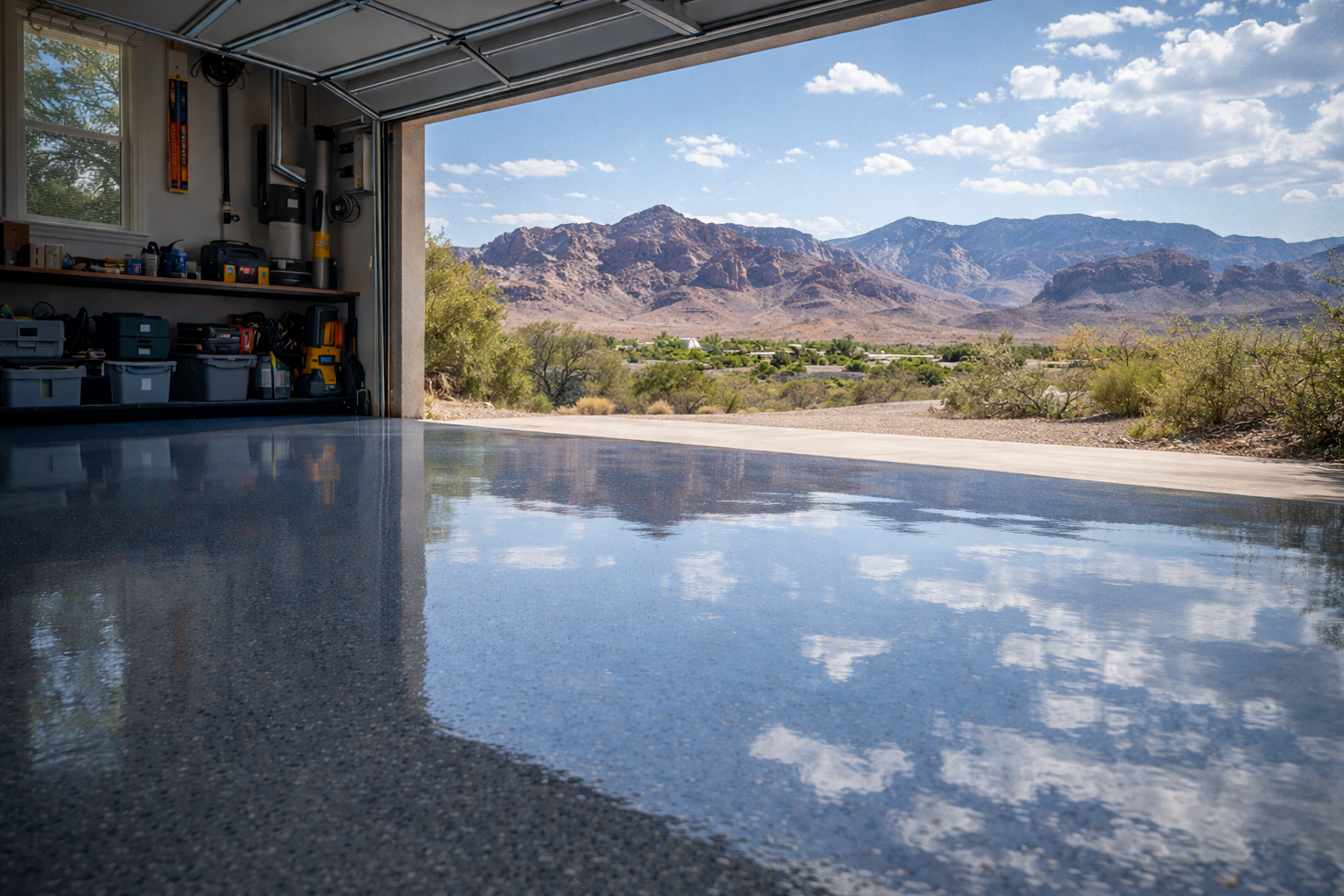
In Nevada, garages with open doors, sunlit showrooms, and exterior walkways receive intense UV exposure throughout the year. Without proper topcoats, these conditions can gradually alter the appearance of the floor.
Professional epoxy systems designed for desert climates typically include a UV resistant polyurethane or polyaspartic topcoat. These protective layers shield the epoxy from sunlight while maintaining color stability and gloss.
For garages that receive significant sunlight during the summer months, this protective layer is essential.
Why Proper Surface Preparation Prevents Heat Damage
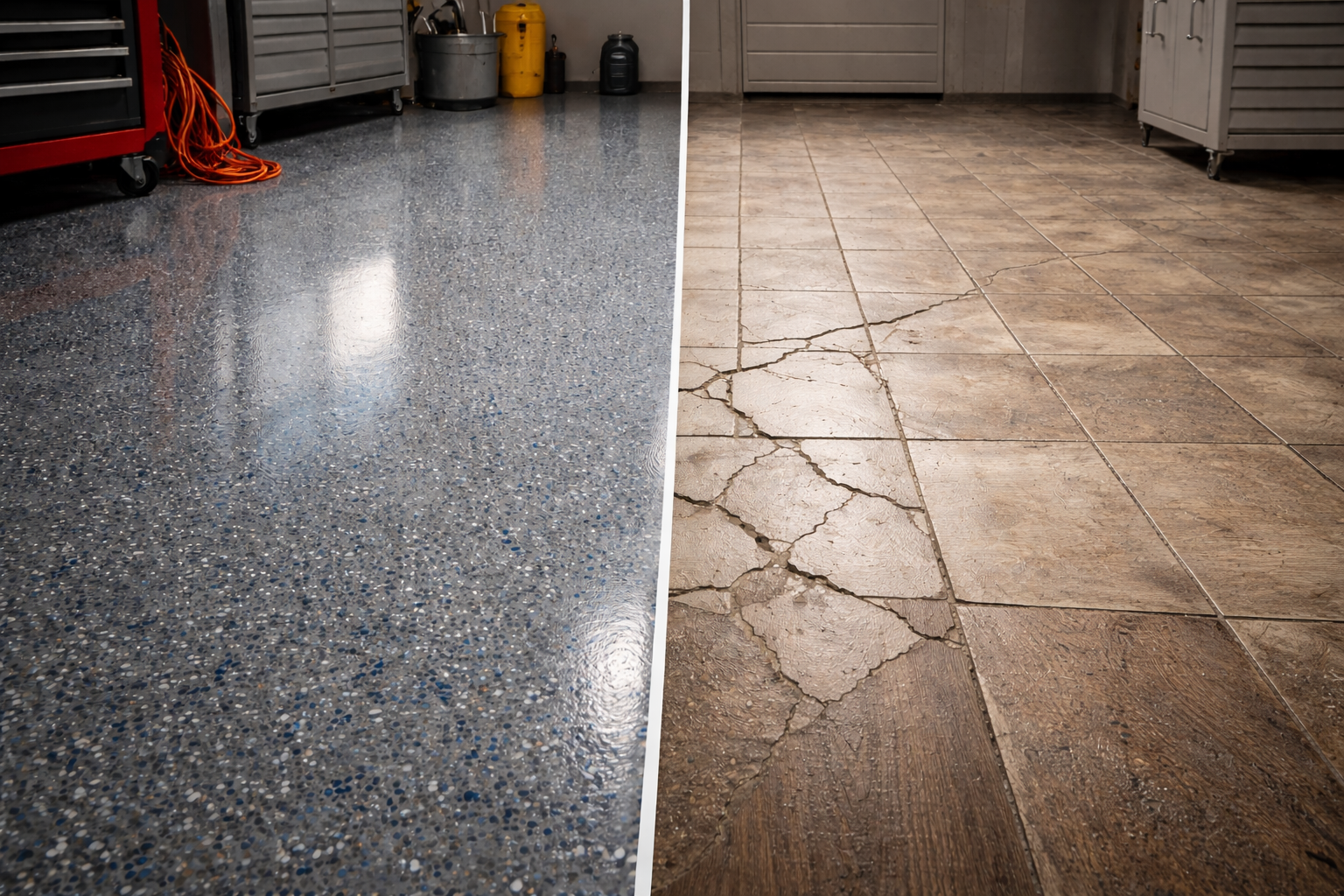
Heat alone rarely damages epoxy floors. Most problems that appear during summer months are actually caused by installation shortcuts.
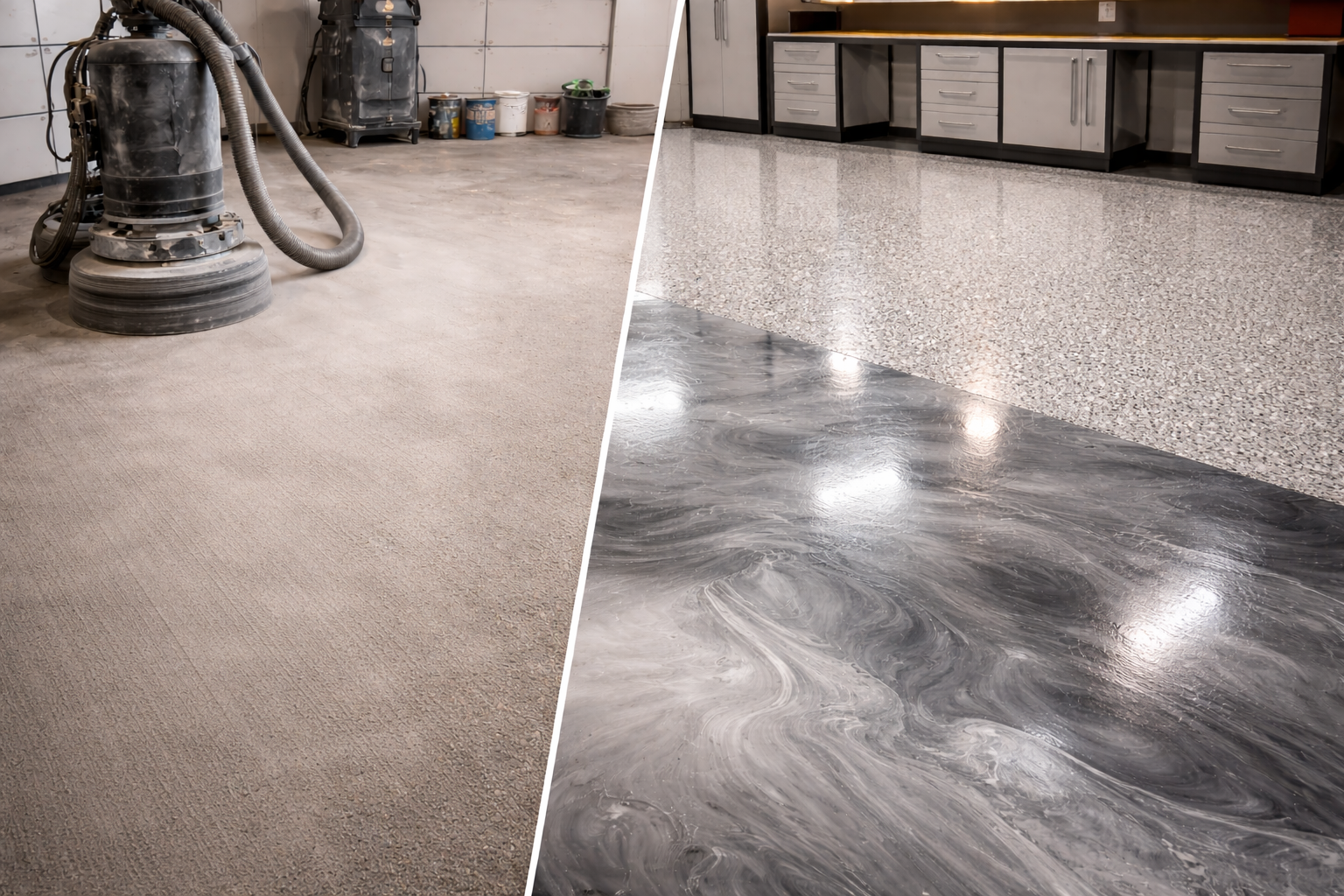
Concrete preparation is the foundation of every successful epoxy floor. The surface must be mechanically ground to open the pores of the concrete and remove contaminants. This process allows the epoxy to penetrate the slab and create a deep mechanical bond.
If the floor is simply cleaned or lightly etched instead of properly ground, the epoxy may only sit on the surface rather than bonding to the concrete. When heat causes the slab to expand, this weak bond can fail.
Professional installers use industrial diamond grinding equipment to prepare the surface correctly. This ensures the epoxy system can handle Nevada's extreme temperature conditions.
Hot Tire Pickup - A Common Summer Concern
One issue homeowners sometimes worry about during summer is hot tire pickup. This occurs when warm vehicle tires soften the epoxy surface and pull it away from the concrete when the car moves.
High quality epoxy systems are specifically designed to resist this problem. When installed correctly with the right primers and topcoats, the floor remains strong even under the weight and heat of parked vehicles.
Inexpensive coatings or DIY kits are more likely to experience hot tire pickup because they lack the industrial grade bonding strength of professional systems.
For Nevada garages that regularly see scorching pavement temperatures, a commercial grade epoxy system is the safest choice.
Temperature Resistant Topcoats That Protect Epoxy Floors
Modern epoxy flooring systems often include advanced topcoats that enhance durability and temperature resistance. These protective layers serve several important purposes.
- They add UV protection to prevent yellowing or fading
- They improve abrasion resistance from vehicle traffic
- They increase heat tolerance during extreme summer temperatures
Polyaspartic and polyurethane topcoats are commonly used because they remain flexible while protecting the underlying epoxy layer. This flexibility helps absorb the expansion and contraction that occurs during temperature fluctuations.
The result is a flooring system that stays strong and visually consistent year after year.
Simple Steps to Protect Epoxy Floors During Nevada Summers
While epoxy floors are built for durability, a few practical steps can help extend their lifespan in high heat environments.
Keeping garage doors closed during the hottest parts of the day reduces UV exposure. Using floor mats under vehicles can also help distribute heat from hot tires during peak summer temperatures.
Routine cleaning is also important. Dust, sand, and debris can act like abrasives on the surface when vehicles drive across the floor.
Fortunately, epoxy floors are extremely easy to maintain and usually only require sweeping and occasional mopping to stay in excellent condition.
Why Professional Epoxy Installation Matters in Nevada
Nevada's desert climate demands flooring systems that are engineered for durability. A properly installed epoxy floor should withstand years of heat, traffic, and daily use without losing its appearance or performance.
Professional installation ensures the concrete is prepared correctly, the epoxy system is applied at the proper thickness, and protective topcoats are added for UV and temperature resistance.
When these steps are done correctly, epoxy flooring becomes one of the most durable surfaces available for garages, workshops, and commercial spaces.
Trust Epoxy Don Vegas for Epoxy Floors Built for the Desert
At Epoxy Don Vegas, epoxy flooring is treated as both a craft and a long term investment. Every floor is installed using professional surface preparation, premium epoxy systems, and high performance topcoats designed for the Nevada climate.
Whether you want to upgrade your garage, protect a commercial workspace, or create a clean, durable floor that can handle extreme summer temperatures, the right epoxy system makes all the difference.
Contact Epoxy Don Vegas today to schedule a consultation and discover how a professionally installed epoxy floor can transform your space while standing up to the heat of Nevada summers.
Get A No Cost Estimate Today
Check Out Our Other Concrete Coatings Articles:
Coming Soon