How Epoxy Flooring Compares to Traditional Tile or Laminate
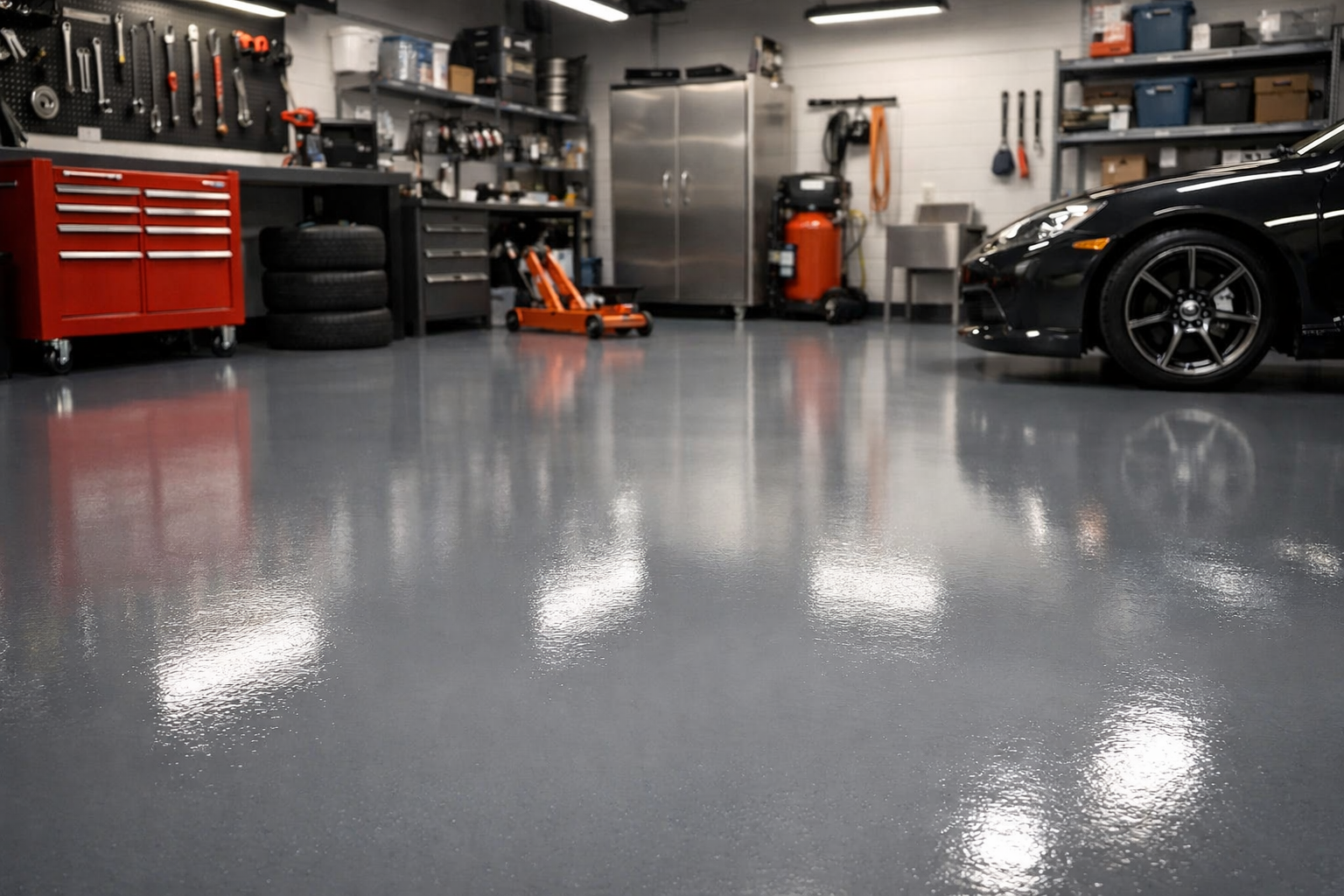
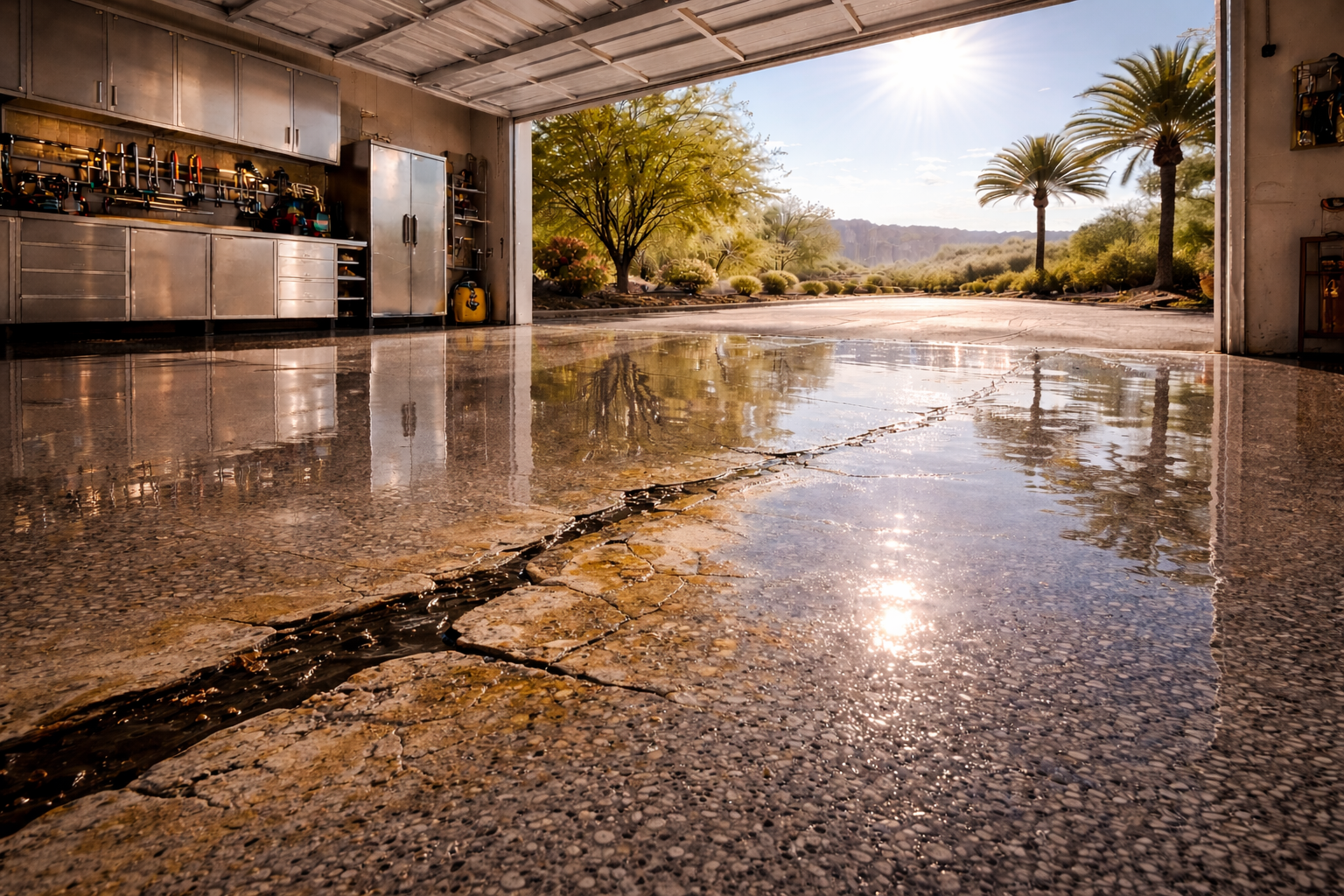
Epoxy flooring is typically more durable, seamless, and moisture resistant than tile or laminate, making it a popular upgrade for garages, workshops, and modern interior spaces. While tile and laminate can work well in many residential settings, professionally installed epoxy creates a continuous surface that resists stains, impacts, and heat while requiring far less maintenance over time.
For homeowners exploring new flooring options, the choice often comes down to performance, maintenance, and long term value.
Tile and laminate have been common choices for decades, but epoxy flooring has gained serious momentum because it combines industrial durability with modern design flexibility.
Understanding how these materials compare helps homeowners choose the right surface for their space.
Why Homeowners Are Comparing Epoxy Flooring to Tile and Laminate
Traditional flooring materials like ceramic tile and laminate became popular because they were affordable, widely available, and relatively easy to install. However, they also come with limitations such as grout maintenance, seam expansion, and susceptibility to moisture damage.
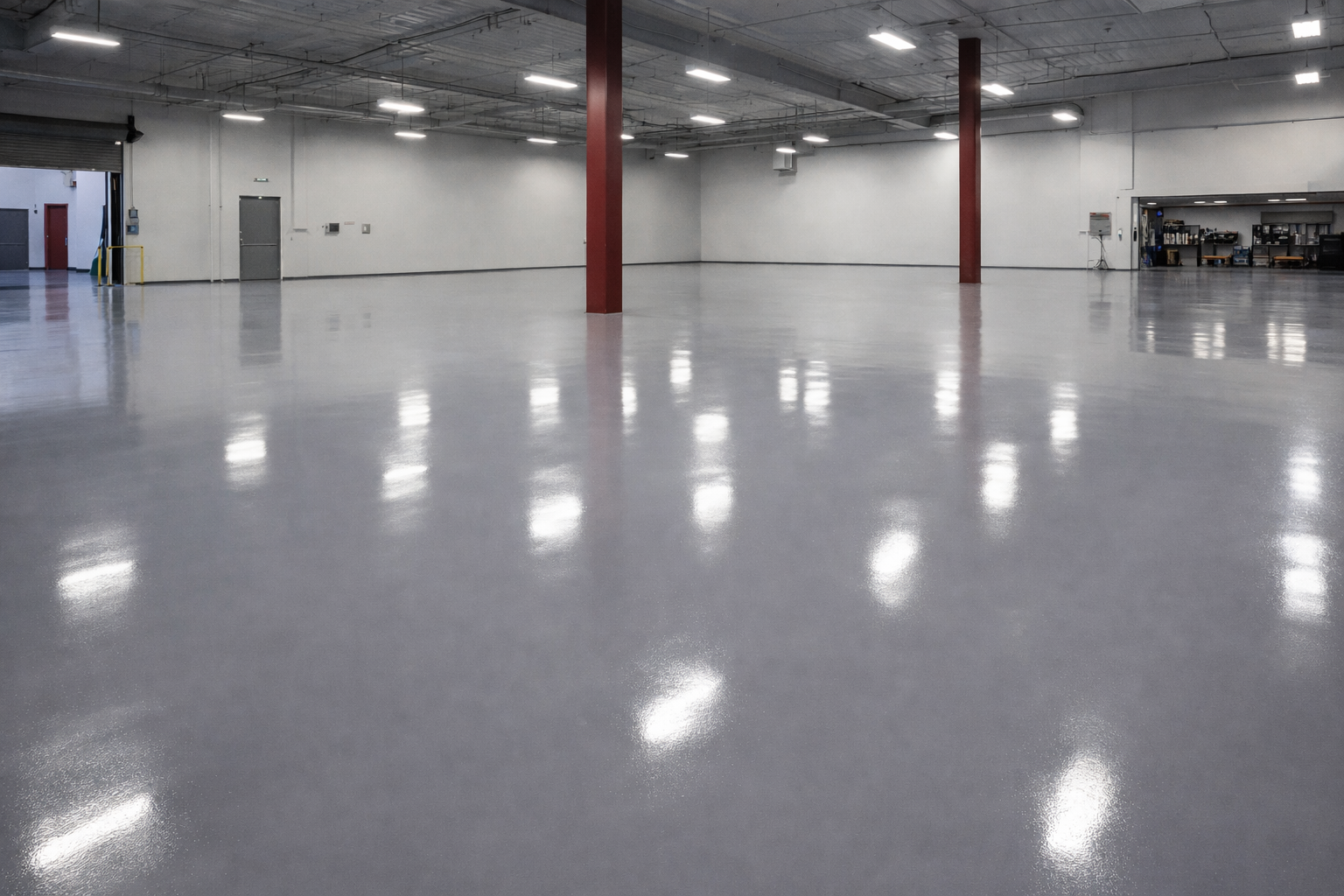
Epoxy flooring approaches the problem differently. Instead of installing multiple pieces that create joints and seams, epoxy forms a continuous protective coating that bonds directly to concrete. This seamless structure is a major reason many homeowners choose epoxy for garages, basements, workshops, and even modern interior rooms.
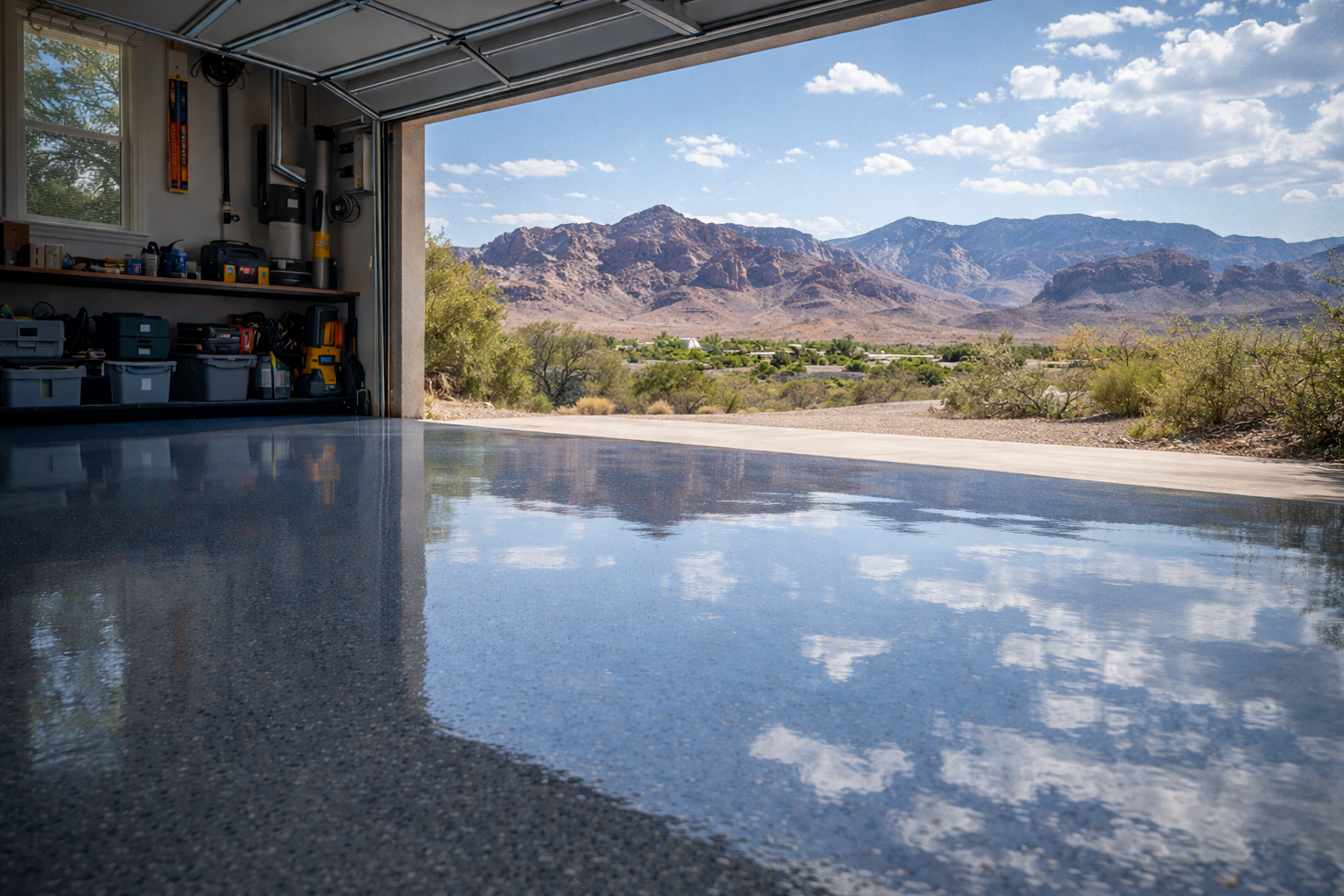
In climates like Las Vegas, where heat, dust, and heavy garage use are common, durability becomes especially important. Flooring that resists cracking, staining, and temperature changes tends to perform much better over time.
Durability Differences Between Epoxy, Tile, and Laminate Flooring
One of the biggest distinctions between these materials is how well they hold up to daily wear.
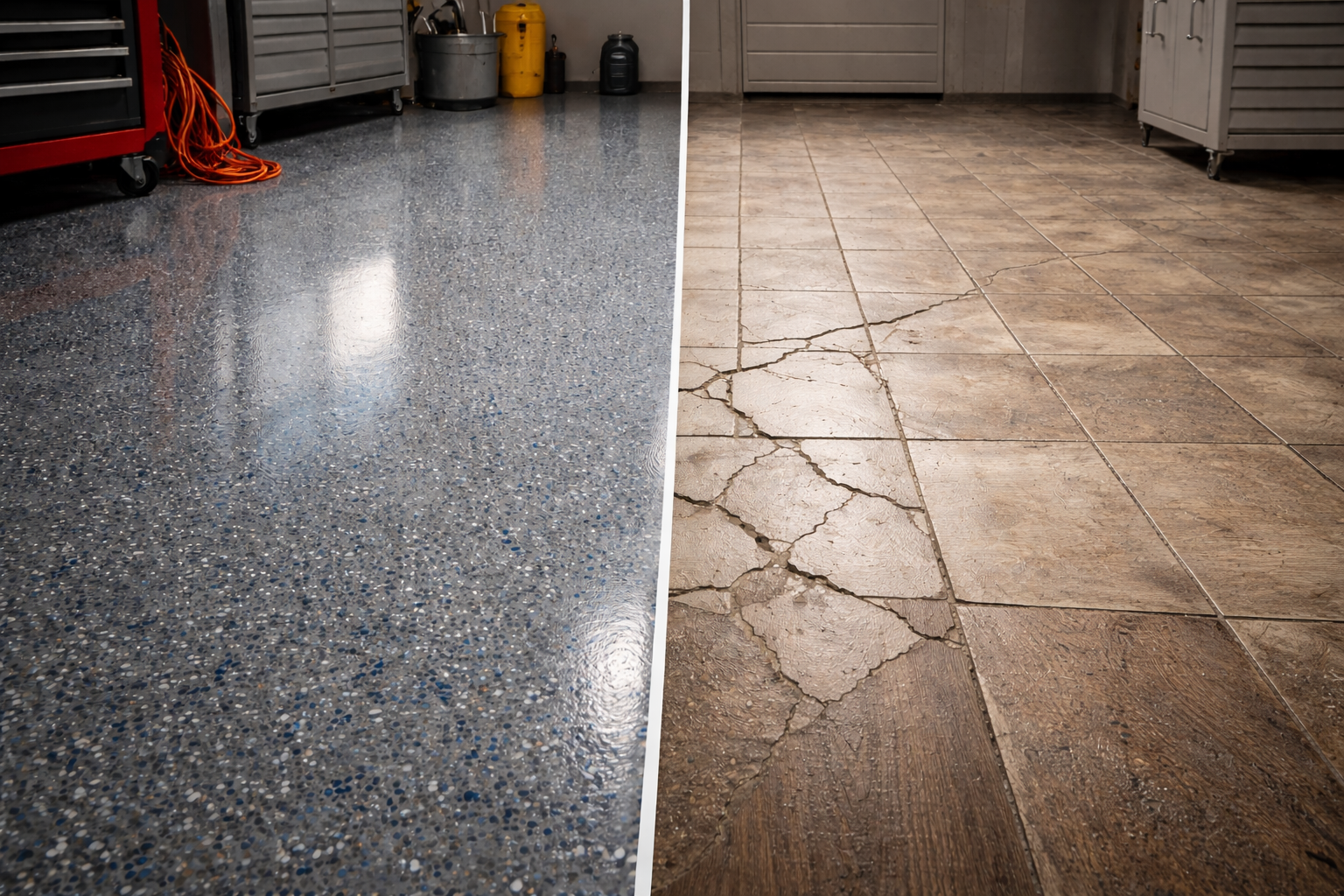
Tile is durable under normal household use, but it can crack under impact and grout lines often deteriorate over time. Dropping a heavy tool or piece of equipment in a garage can easily damage tile.
Laminate flooring is designed primarily for indoor living areas. While it handles foot traffic well, it is more vulnerable to moisture and swelling if exposed to water for extended periods.
Epoxy flooring stands apart because it is engineered as a protective coating. Once cured, it forms a hard, chemical resistant surface that can withstand heavy use, vehicle traffic, and impact.
Key durability advantages of epoxy include:
- High resistance to scratches, abrasions, and impacts
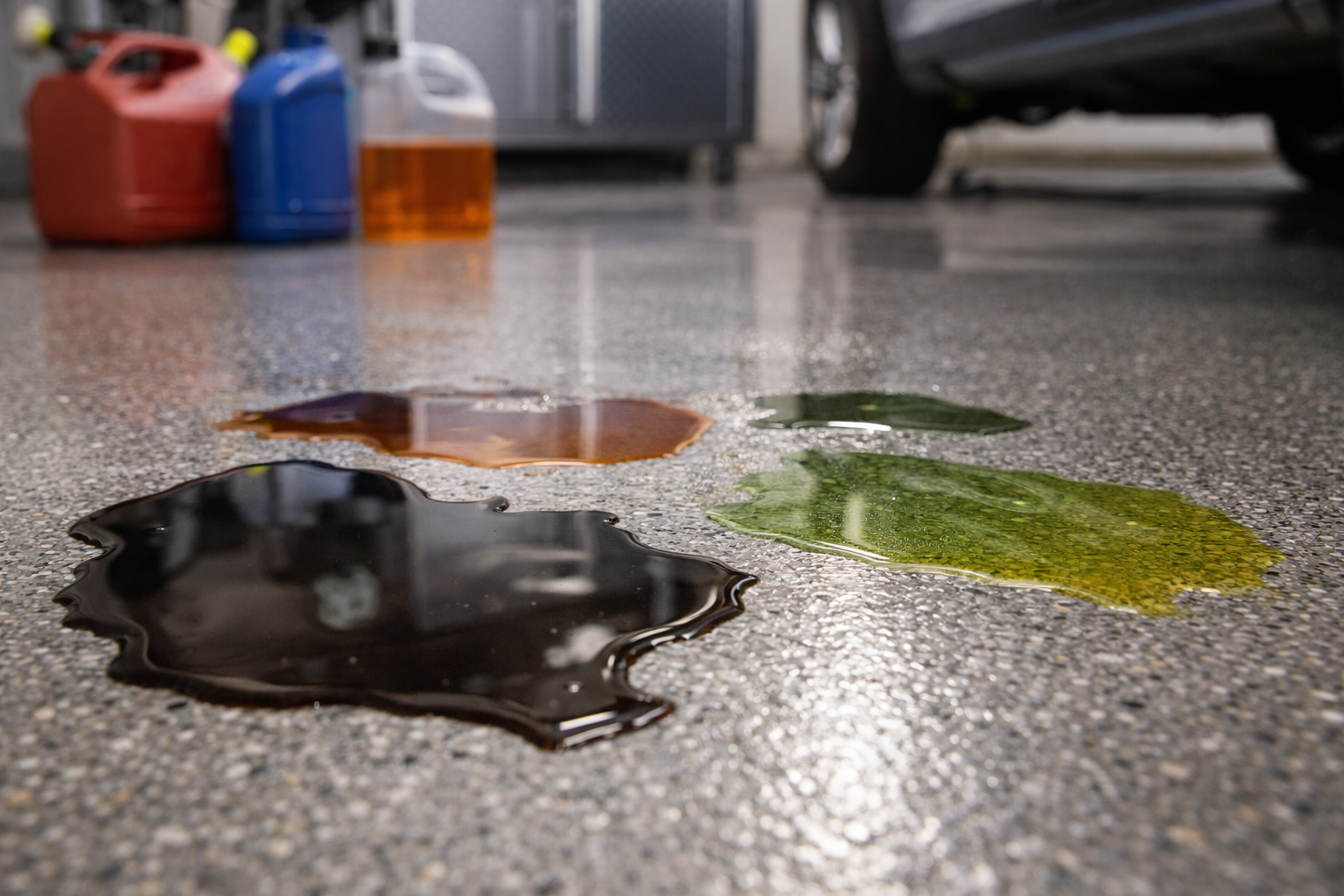
- Protection against automotive fluids, oil, and chemicals
- No grout lines or seams that weaken over time
- Strong bond directly to the concrete slab
For garages and workspaces, these characteristics provide a clear functional advantage.
Maintenance Requirements for Each Flooring Type
Maintenance is another major factor homeowners consider when comparing flooring materials.
Tile floors require periodic grout cleaning and resealing to prevent staining and discoloration. Dirt and debris often accumulate in grout lines, making cleaning more time consuming.
Laminate flooring is easier to clean but must be protected from excess moisture. Water infiltration can cause the boards to warp or separate, especially in humid environments.
Epoxy flooring offers one of the simplest maintenance routines available. Because the surface is completely seamless, there are no joints where dirt can accumulate.
Typical epoxy floor maintenance involves:
- Sweeping or dust mopping loose debris
- Occasional mopping with mild cleaner
- No grout scrubbing or sealing required
This simplicity is one of the reasons epoxy flooring has become so popular in garages and high traffic residential spaces.
Design Flexibility and Appearance
Some homeowners initially assume epoxy floors look industrial, but modern installation techniques offer a wide range of visual styles.
Tile provides many decorative patterns, but the appearance is limited by grout lines and the fixed size of each tile piece.
Laminate can mimic wood or stone, but the seams between boards are always visible.
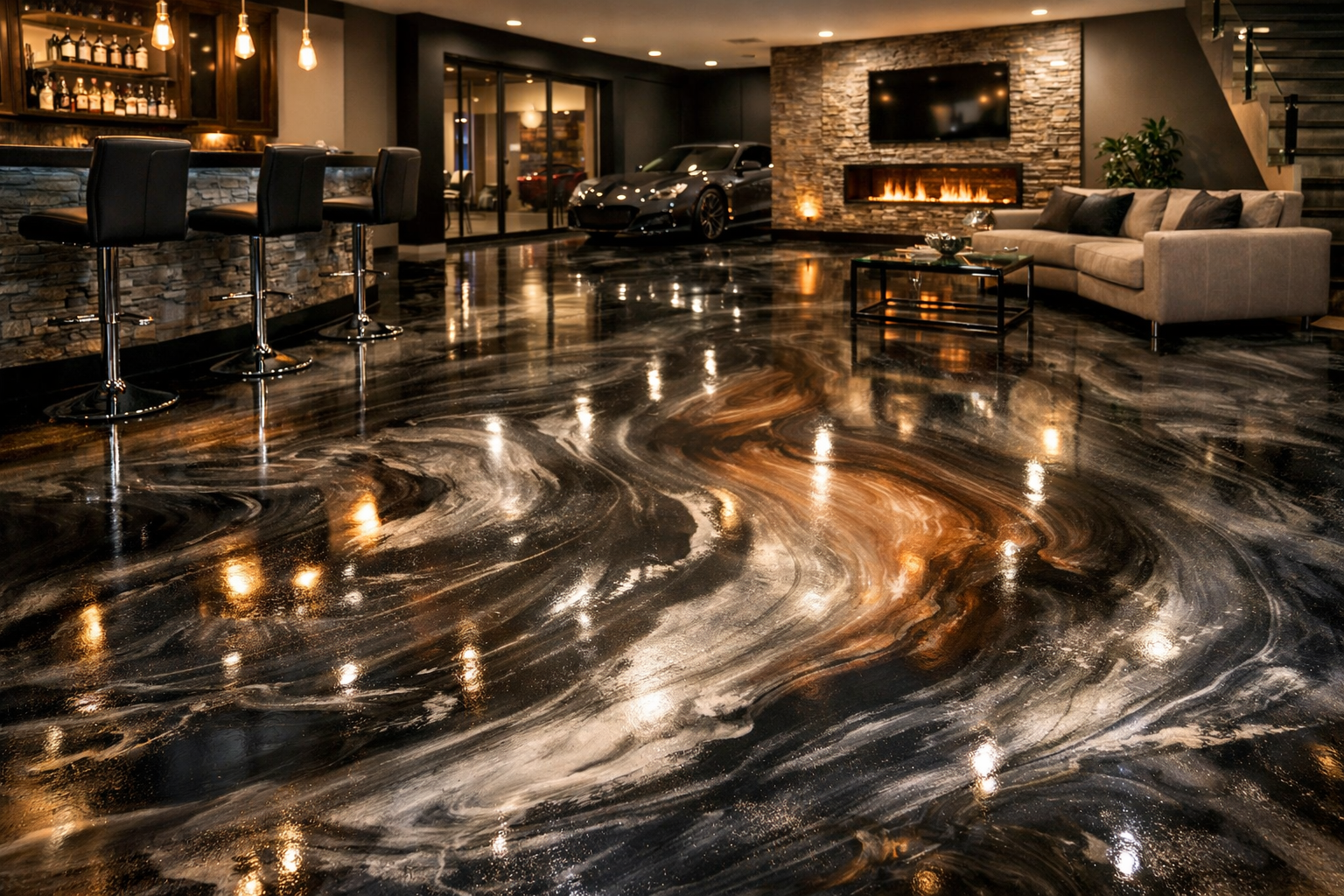
Epoxy flooring offers a different aesthetic advantage. Because it is poured and finished as a continuous surface, installers can create completely custom looks.
Design possibilities often include:
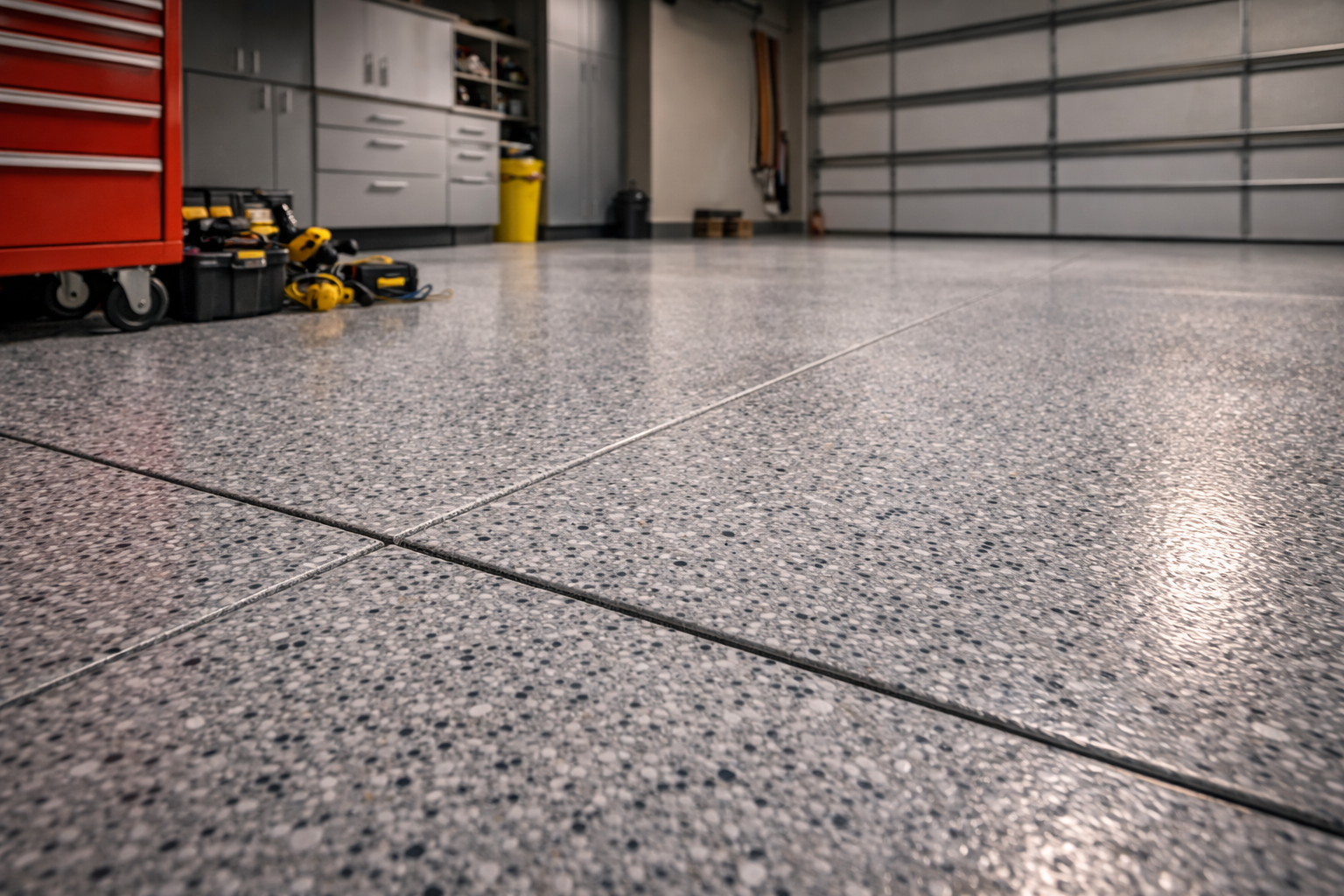
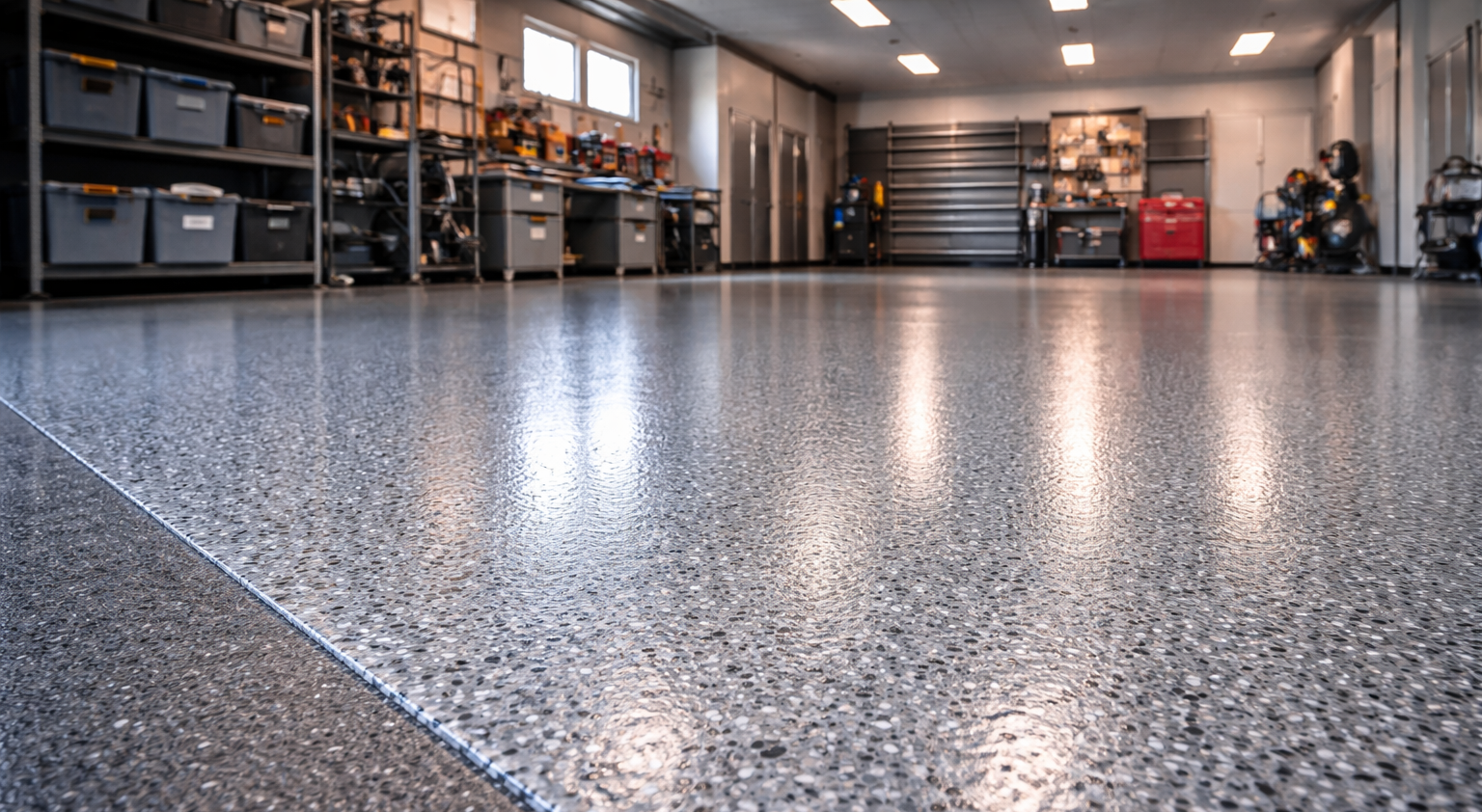
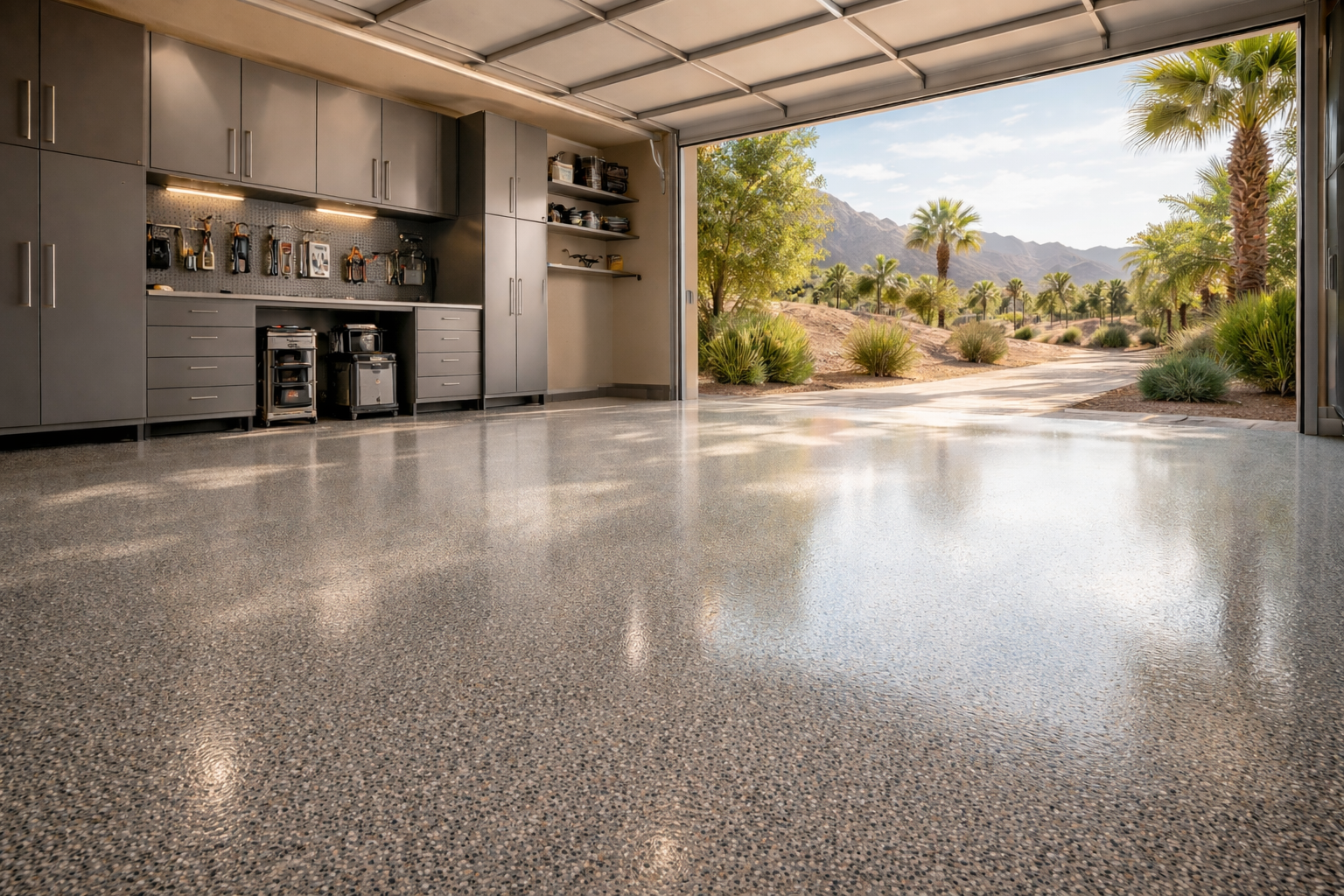
- Decorative flake systems that add texture and color variation
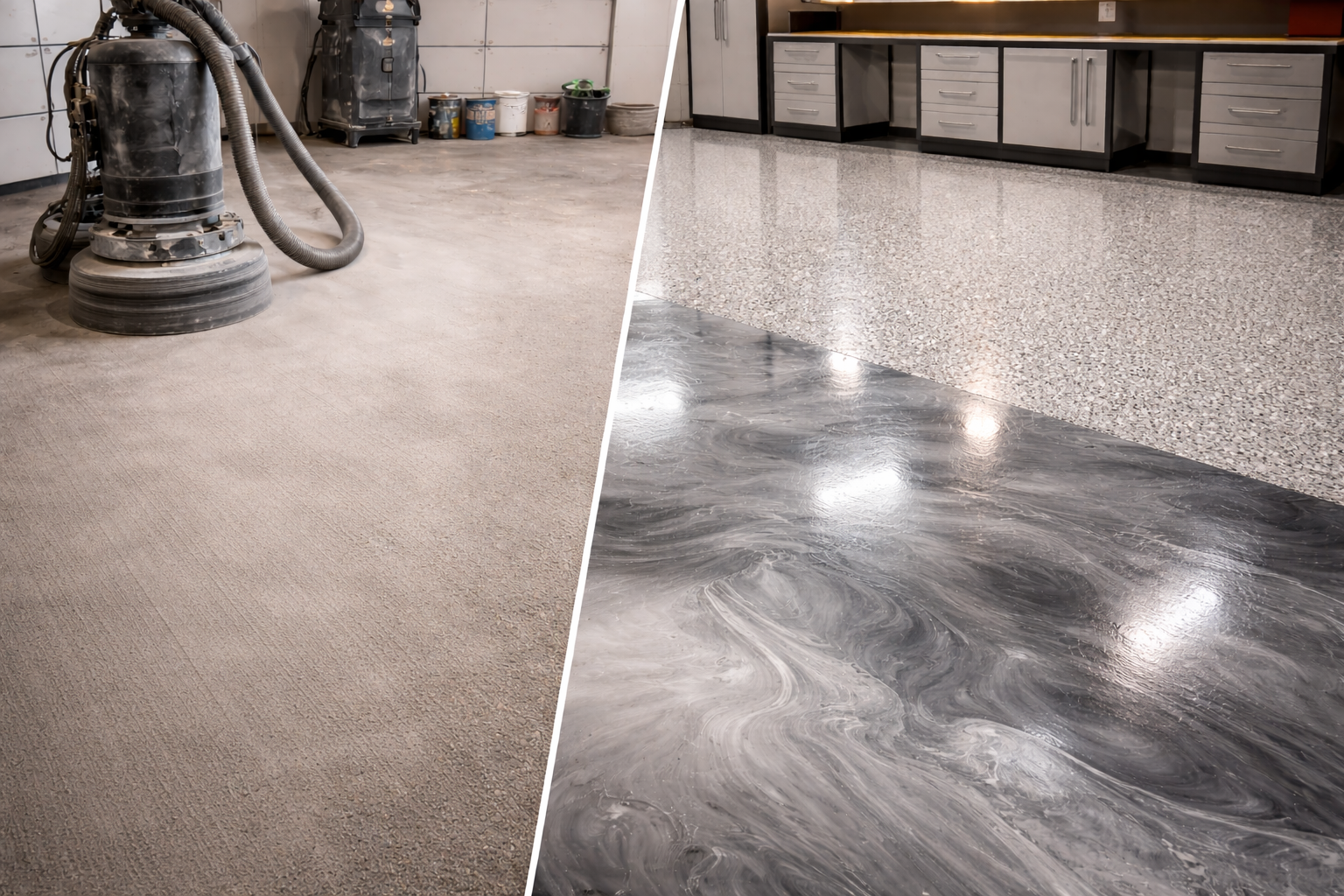
- Metallic epoxy finishes with unique flowing patterns
- High gloss or satin finishes for modern spaces
- Solid color coatings for clean, minimal designs
For homeowners who want a polished garage or a modern workshop aesthetic, epoxy provides a level of customization that tile and laminate cannot easily replicate.
Where Each Flooring Type Works Best
Each flooring option has environments where it performs best.
Tile remains a good choice for kitchens, bathrooms, and entryways where moisture resistance and traditional aesthetics are priorities.
Laminate flooring works well in living rooms, bedrooms, and other dry indoor spaces where homeowners want the appearance of wood without the cost of hardwood.
Epoxy flooring excels in areas where durability and protection are critical.
These spaces commonly include:
- Residential garages
- Workshops and hobby rooms
- Home gyms
- Basements
- Utility or storage rooms
Because epoxy bonds directly to concrete and resists stains, chemicals, and heavy loads, it provides a level of protection that traditional flooring cannot match in these environments.
What Professional Epoxy Installation Looks Like
A high quality epoxy floor depends heavily on professional surface preparation and installation technique.
The process typically begins with mechanical grinding of the concrete to remove contaminants and create the proper profile for adhesion. Any cracks or surface imperfections are repaired before the coating system is applied.
Next, the installer applies a base coat of epoxy, followed by decorative elements such as color flakes if desired. Finally, a protective topcoat seals the system and adds durability.
When installed correctly, a professional epoxy floor becomes an integrated part of the concrete slab rather than a surface layer that can peel or shift.
This professional approach is what separates long lasting epoxy floors from short term coatings.
Choosing the Right Flooring for Your Needs
When comparing epoxy, tile, and laminate flooring, the best option depends on how the space will be used.
If a homeowner wants a traditional indoor look, tile or laminate can still be good choices. However, for garages, workspaces, and areas exposed to heavy use, epoxy flooring offers significant performance advantages.
Homeowners often choose epoxy because it combines three key benefits:
- Industrial level durability
- Minimal maintenance requirements
- Modern, customizable design options
These qualities make it one of the most practical flooring upgrades available for concrete surfaces.
Upgrade Your Space with Professional Epoxy Flooring
If your garage or workspace still has bare concrete or aging tile, epoxy flooring can completely transform the look and performance of the space.
Epoxy Don brings expert craftsmanship, premium materials, and years of installation experience to homes throughout Las Vegas. Every floor is professionally prepared, carefully installed, and built to handle real world use.
If you are ready for a floor that looks incredible and stands up to daily wear,
contact Epoxy Don today to schedule a consultation and discover how epoxy flooring can upgrade your space.
Get A No Cost Estimate Today
Check Out Our Other Concrete Coatings Articles:
Coming Soon